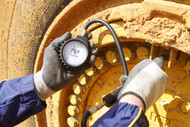
Earthmover tyre pressure
Vérification de la pression d'un pneu
What is the correct earthmover tyre pressure?
Maintaining the right tyre pressure for your earthmover tyres is essential for optimising performance, safety and operational costs in heavy machinery operations.
The importance of tyre pressure in your earthmoving operations
Eartmover tyre pressure is more than just a technical specification; it plays an important role in the functionality of equipment. For earthmoving vehicles, the effects of tyre pressure span several key areas:
-
Load Capacity: Each earthmover tyre comes with a specified load capacity that changes according to tyre pressure. Tyres that are not adequately inflated may fail to support the necessary load, resulting in accelerated wear and potential blowouts.
-
Traction and Stability: Maintaining the correct tyre pressure vs tyre load optimises ground contact, enhancing traction, stability and the overall handling of machinery, particularly on uneven surfaces.
-
Fuel Efficiency: Properly inflated tyres decrease rolling resistance, contributing to fuel savings and reduced operational costs.
-
Tyre Wear and Longevity: Keeping tyres at the right pressure vs tyre load promotes even wear, extends tyre lifespan and minimises the frequency and expense of earthmover tyre replacements.
-
Safety: Proper tyre pressure vs tyre load is essential for operator safety, as both under-inflation and over-inflation can result in tyre failure, posing significant hazards on the job site.
Best practices for tyre pressure management
To maintain optimal performance of Michelin earthmover tyres, consider adopting the following best practices:
-
Check tyre pressure when cold: It is recommended that tyre pressures are checked when the tyres are cold. If they are checked after running, they will be hot and the pressure reading will not be accurate.
-
Never deflate a hot tyre: Since tyre pressure increases with temperature, a hot tyre should never be deflated.
-
Maintain equal pressure in dual tyres: Always respect the pressure equality between dual tyres to ensure balanced operation.
-
Regular checks with nitrogen inflation: Utilising nitrogen for inflation does not exempt a tyre from the need for regular pressure checks.
-
Follow manufacturer recommendations: In all circumstances, apply to the tyre pressures recommended by the machine or tyre manufacturers for optimal performance. The operating pressure can only be accurately provided by your usual Michelin contact or an experienced professional who considers various factors, including machinery type, terrain, cycle lengths, material movement and loads.
And for even more convenience, you can opt for an earthmoving TPMS (Tyre Pressure Monitoring System).
This system continuously monitors tyre pressure in real-time and alerts the driver if the pressure is too low or too high. By maintaining the appropriate pressure, the TPMS not only enhances safety by reducing the risk of tyre blowouts but also optimises fuel efficiency by lowering rolling resistance. Furthermore, this system helps extend tyre lifespan by promoting even wear across the tyre surface. In summary, the TPMS is a valuable tool for any vehicle owner looking to improve both the performance and safety of their equipment.
Factors affecting tyre pressure requirements
Several factors should be taken into account when determining the right earthmover tyre pressure:
-
Load Conditions: The amount and distribution of load on the machinery influence the required tyre pressure. Heavier loads necessitate higher tyre pressures to maintain structural integrity and ensure safety.
-
Operating Weather Conditions: Terrain and environmental factors, such as temperature and humidity, can also affect tyre performance and pressure.
-
Type of Application: Different applications require different tyre pressures, particularly between varying tasks, such as excavation, loading or hauling.
The impacts of incorrect tyre pressure
Operating earthmover tyres at incorrect pressures (excessive pressure or under pressure) can lead to negative consequences:
Underinflated tyre
Underinflated tyres can have negative consequences:
-
They can cause tyres to overheat, leading to blowouts.
-
They cause excessive wear on the outer edges of the tread, reducing their longevity.
-
They increase rolling resistance, leading to higher fuel consumption.
Overinflated tyre
Overinflated tyres can have several negative impacts on your business and tyres. Discover the main one:
- Results in a harsher ride, impacting the operator's comfort.
- Can cause excessive wear in the central tread, thereby reducing tyre lifespan.
- Decreases traction, particularly in off-road conditions, making equipment more susceptible to slipping or tipping.
MICHELIN earthmover tyre pressure chart
Michelin provides detailed guidelines on the recommended pressures for its tyres designed for earthmoving machinery. These specifications may vary depending on the tyre model, load and operating conditions. It is essential for operators and fleet managers to familiarise themselves with these specifications for the specific Michelin earthmover tyre models they are using.
To help you to find the right pressure for your vehicles, you can use our MICHELIN Pressure Advisor tool.
Other articles to find out more:
Need more advice? Discover all MICHELIN earthmover tyre tips


