Step 1: Understand your operating environment
Your workplace conditions form the foundation for making the right choice. Surface types determine whether you need smooth or treaded patterns - indoor warehouses with polished concrete floors demand different solutions than outdoor yards with rough terrain.
Temperature extremes affect rubber compounds and performance characteristics. Cold storage facilities require compounds that remain flexible, while hot manufacturing environments need heat-resistant materials to prevent premature tread wear.
Consider the presence of oils, chemicals, or debris that could compromise safety. Heavy loads combined with frequent starts and stops create different stress patterns compared to lighter, continuous operations. Ground conditions such as slopes, uneven surfaces, or moisture levels directly influence the grip and stability requirements for your specific application.
Step 2: Select the right types of forklift tyres
Material-handling tyres come in several technologies, each engineered for particular operating environments and designed to deliver specific advantages. Discover the different tyre types and find the best one for your needs.
Pneumatic tyres
Industrial pneumatic tyres encompass several constructions designed for outdoor use and uneven surfaces. This family primarily includes bias (diagonal) and radial tyres.
Radial tyres
Radial tyres employ plies of metal or fabric that run straight from bead to bead, combined with a crown reinforcement made of several steel belts. This construction decouples sidewall flex from tread movement and concentrates reinforcement where it matters most: across the tyre crown.
Discover radial pneumatic tyres key benefits:
High mileage resulting in low cost per hour
Best traction on all types of surfaces
Designed to increase resistance to heating, making radial tyres suitable for the most demanding highload and high-speed applications
Bias tyres
Bias tyres are constructed from multiple fabric plies laid one upon another at alternating diagonal angles from bead to bead. Each ply crosses the one immediately beneath it, a configuration that is why bias tyres are also known as diagonal‑ply tyres.
Bias tyres deliver key benefits:
A robust pneumatic tyre for rough industrial use
High stability and enhaced traction
Operator comfort
Cost-effective long-term investment
Non pneumatic solutions
In demanding material‑handling environments, non‑pneumatic tyre solutions offer a reliable alternative to traditional air‑filled tyres.
Solid Tyres
Solid tyres come in two main constructions: resilient and Press‑On (also called Cushion).
Resilient Solid tyres
Resilient tyres are manufactured from multiple layers of distinct rubber compounds. Their typical construction comprises an abrasion‑resistant tread layer for durability, a softer middle layer that absorbs shocks and reduces internal tyre temperature, and a heel layer with steel bead reinforcements to ensure a secure fit on the wheel.
This layered design delivers three clear advantages:
Puncture free - Suitable for harsh environment
No air pressure maintenance
Designed to provide high mileage with a low cost per operating hour.
Press On Solid tyres – Cushion tyres
Press‑On (also called Cushion press) tyres consist of a rubber tread bonded to a cylindrical steel band and are mounted by press fit onto a steel hub.
The key benefits of Press tyres:
Puncture free tyre
Maintenance free
Designed for high stability
Designed for high load carrying capacity
Airless tyres
Airless tyres are non‑pneumatic solutions engineered to replace air‑filled tyres while preserving shock‑absorption capabilities. They are manufactured from
Puncture‑proof, airless tyres eliminate downtime caused by flats
No air pressure to maintain
Good durability and resistance to cuts and abrasion
Designed for comfort, stability and handling characteristics
Polyurethane tyres
Polyurethane tyres are non‑pneumatic solutions constructed from a polyurethane elastomer bonded to a metal wheel or insert; they combine durability with consistent performance on warehouse floors and industrial surfaces.
Zoom in on non-marking forklift tyres
Non‑marking rubber tyres are specially formulated to prevent black marks on indoor floors while delivering the durability and performance required in industrial environments. Ideal for warehouses, logistics areas and sensitive surfaces (strict cleaning regimes, floor aesthetics), these tyres are available in several technologies (mainly polyurethane or solid constructions) and help reduce cleaning costs and premature floor wear.
Step 3: Load capacity and weight considerations
Understanding your forklift’s maximum load capacity is key to choosing the right tyres. Always follow the manufacturer’s load limits and tyre load ratings—exceeding them can reduce stability, speed up tyre wear, and raise the risk of failure.
How to determine the correct load capacity for forklift tyres?
Determining the correct load capacity for forklift tyres is essential for safety, tyre life, and operational reliability. To determine the correct load capacity, you will need to:
Gather forklift machine data (forklift model, lifting capacity - for small (1-9 tons), medium (9-18 tons) forklifts and heavy-duty forklifts (>18T), load center, etc.)
Define maximum in-service weight
Estimate axle weight distribution
What impact does the weight of the forklift itself have on tyre selection?
The forklift’s tare weight contributes to total axle loads even without payload. Heavier machines need tyres with higher static load ratings and stronger construction. Add the weight of attachments, counterweights or modifications when calculating required tyre capacity.
Step 4: Identify the right forklift tyre size and specifications for your machine
To correctly identify a tyre’s size and specifications, you could refer to the manufacturer’s recommended size or/and check/read the tyre’s sidewall. It is important to choose the right forklift tyre size to avoid premature tread wear and tyre failure, loss of road-carrying performance, decreased operator safety, etc.
What is the foklift tyre size nomenclature for pneumatic tyre?
There are two main types of pneumatic tires: Radial and Bias Ply (also known as Cross Ply). The tire construction type can be identified in the size designation: the letter "R" indicates a radial construction, while a hyphen "-" indicates a bias ply construction.
Because radial and bias ply tires have different handling and stability characteristics, they should not be mixed on the same forklift. To ensure optimal performance and safety, tires mounted on the same axle should also be of the same brand, same size, and have a similar remaining tread depth.
Examples:
8.25 R 15: Radial tire construction.
8.25 - 15: Bias ply (cross ply) tire construction of the same size.
What is the role of wheel size and type in tyre selection?
Wheel size and wheel type directly determine which tyres can be safely fitted, how the vehicle handles, and how effectively the tyres perform. They influence tyre width, sidewall height, overall diameter, load capacity and fitment constraints, all of which impact safety, stability and operational performance.
Discover the Michelin forklift tyres
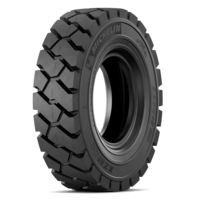
Michelin XZM
Switch for a longer service life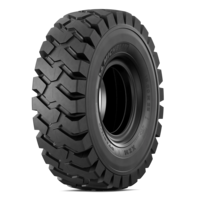
Michelin XZM 2+
Your productivity deserves Michelin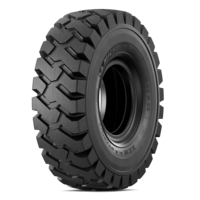
Michelin XZM 2+A
Your productivity deserves Michelin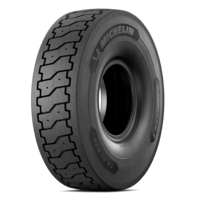
Michelin X STACKER 3 HD
Boost your productivity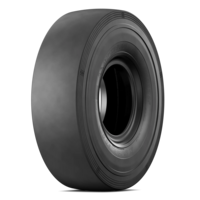
Michelin X STACKER 2
Maximise the uptime of your reach stacker


Frequently asked questions
Michelin expert answer your questions
Get an answer to your question
Michelin forklift tyre size is printed on the tyre sidewall. These markings reveal width, aspect ratio, construction type, and rim diameter in formats like 18.00R25. Tyre marking formats may vary by tyre type and region.
Replacement intervals depend on operating conditions, tyre type, and maintenance. It is important to perform regular visual check. Read our forklift tyre replacement guide.
Other articles to find out more:
-
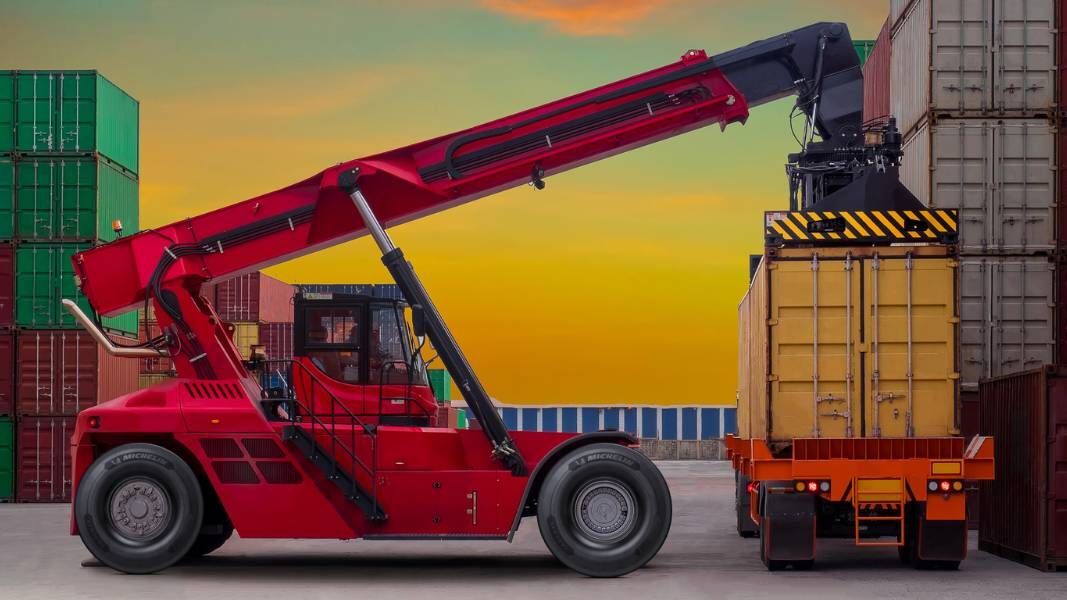
Boost your productivity with the Michelin X Stacker 3 HD tyre: A must-have for reach stackers
To ensure the smooth flow of goods through port, specific equipment is required. This includes reach stackers, responsible for moving containers in confined spaces. These vehicles transport heavy loads over long distances and long periods. Their quick maneuvers and tight turns put considerable stress on tyres, resulting in severe and irregular tread wear. This can lead to reduced operational efficiency, additional maintenance, and increased costs. Over the past few years, Michelin's port tyre experts have worked continuously to innovate and develop a product dedicated to answering the needs of reach stackers. To gain insight into the issue of uneven wear, the mechanics related to it, and the use of reach stackers, we discussed with Boris Piol, Michelin Industrial Tyres Product Manager.Learn more -
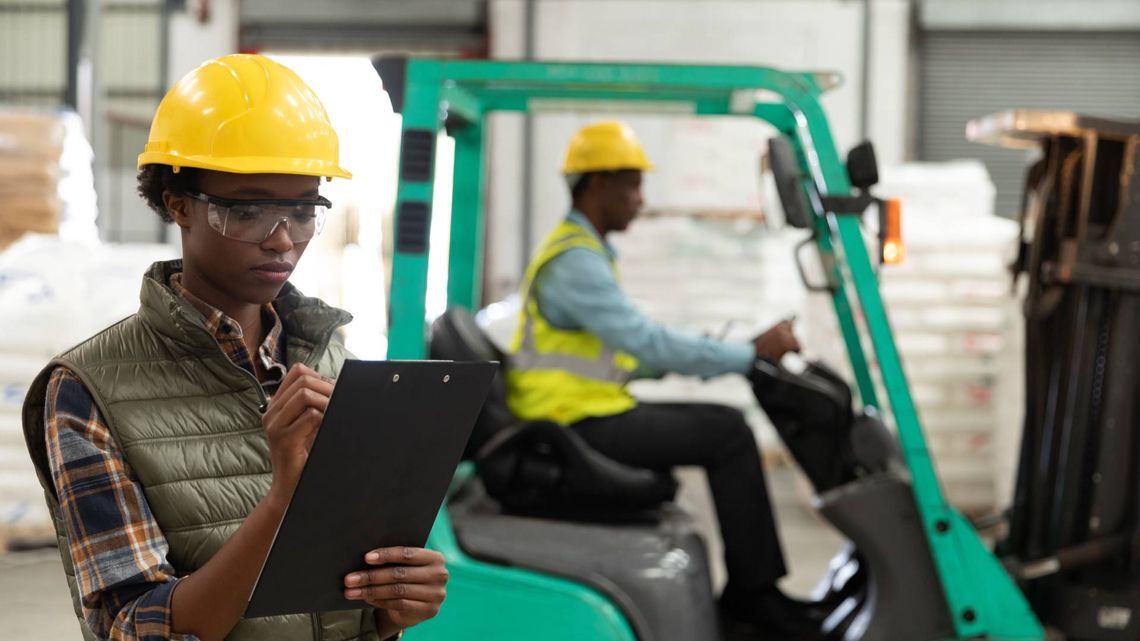
Forklift tyre replacement: when and how to get it right?
Just like with your car, replacing the tyres on your forklift is an absolute necessity. As a cornerstone of safety, their condition demands attention. Closely monitoring their wear and overall appearance is essential: it tells you exactly when to change them, helping you avoid costly downtime, discomfort, or instability issues. In this guide, we’ll go over the various signs that indicate forklift tyres need to be replaced, and we’ll also outline the different steps involved in the replacement process.Learn more