Tyre regulations UK: fitting new tyres
UK Construction and Use Regulation 27(1) require that tyres fitted on the same axle are of the same size and construction. According to the legislation, you can therefore fit tyres with different tread patterns if they:
are made by the same manufacturer,
the same size,
the same construction (radial or bias),
belong to the same usage category (road tyres, special tyres, snow with M+S markers),
have the same approval number,
have identical load capacity indices,
and have the same speed rating.
Michelin's recommendations
Michelin recommends fitting new tyres with identical tread patterns on the same axle or, if this is not possible, fitting twin tyres of the same type.
Tyre regulations UK: fitting regrooved tyres
Regulation permits the fitting of regrooved tyres on all axles of commercial vehicles, including for the transport of persons or hazardous materials, provided certain other criteria are met in relation to the dimension of the tyre and the regrooving pattern and method.
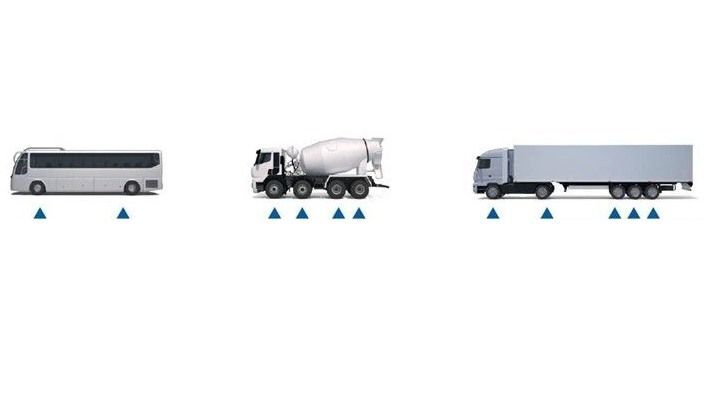
Possible mounting for regrooved truck tyres
For more information, read our article on regrooved tyres.
Tyre regulations UK: fitting retreaded tyres
Uniform fitment on an axle
According to the legislation, the mounting must be uniform on an axle fitted only with retreaded tyres. In addition, the following technical characteristics of the retreaded tyres must be the same:
retread brand,
tyre size,
tyre structure,
speed rating and load index,
tyre use category.
It is not recommended to mount retreaded tyres from different retreaders on the same axle, regardless of the casing brand.
It is PERMITTED to mount retreaded tyres from the same retreader, regardless of the casing brand.

Michelin's recommendations
Michelin Remix tyres are designed and manufactured to be used on drive axles and trailer axles.
We recommend that you do not fit Michelin Remix tyres on the first steering axle of motor vehicles, including those with a Z tread pattern.
It is possible to fit Michelin Remix tyres on the second front axle of an 8 x 4 rigid truck.
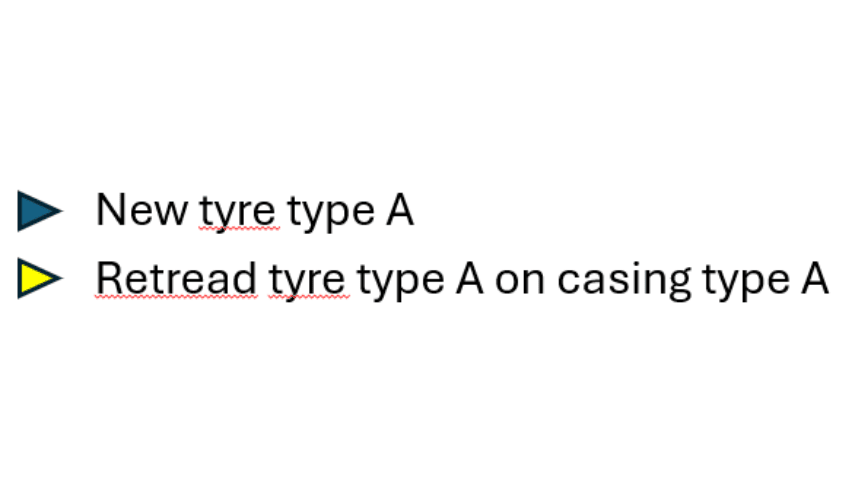
Mixed fitment on an axle
Tyre regulations in the UK specify that the MIXED fitment of approved tyres on the same axle is possible only if:
The retreader and new brands are the same.
The casing brands are the same (new and retreads).
Also, the following technical characteristics of the retreaded and new tyres fitted to the same axle must be the same:
casing and retread brand,
tyre size,
structure (radial or bias),
speed rating and load index, and
tyre use category (road, all-terrain, snow - M+S marking)
Legal requirements for tread pattern depths on the same axle
The difference between the depths of the main grooves on two tyres fitted on the same axle must not exceed 5mm.
For more information, read our article about HGV tyre legal tread depth.
UK tyre life legislation
Tyres are made from various types of material and components, the properties of which change over time. This change depends on the storage conditions (temperature, moisture levels, position, etc.) and conditions of use (load, speed, inflation pressure, wheel condition, etc.) that tyres are exposed to.
For safety reasons, UK legislation stipulates that it is not permitted to use tyres which are more than 10 years old for the front axle or axles of goods vehicles with a gross vehicle weight of more than 3.5 tonnes, buses and coaches.
The same applies to retreaded tyres. The date of retreading, rather than the date of first manufacture, is used to determine the age of the tyre. (2)
Michelin's recommendations
Michelin recommends that as well as regular user checks, tyres are inspected regularly by qualified professionals who can assess their suitability for continued service. This inspection should take place at least annually, from the 5th year since a tyre entered service or 8 years after its date of manufacture.
After one of these dates, as well as regular visual and inflation pressure checks, it is recommended to have this annual inspection carried out by a tyre specialist.
Failure to follow these recommendations may lead to a deterioration in the performance of your vehicle, handling issues and/or a tyre malfunction that could jeopardise the safety of the user and third parties. Michelin shall not be responsible under any circumstances for damage that occurs as a result of and/or during use that does not comply with its guidelines.
UK legal standards for tyre wear
According to UK law, the grooves of the tread pattern must have a depth of at least 1.0 mm throughout a continuous band across at least 3/4 of the breadth of the tread and around the entire circumference.
In addition:
the original tread pattern must be visible in the remaining quarter.
no fabric must be visible either on the surface or at the bottom of tread patterns,
there must be no deep tears on the sidewalls of tyres.
If the legal or technical wear limit is reached, the tyre must be removed and replaced. A professional must be consulted in the event of abnormal wear or if there is a difference in wear rates between tyres on the same axle.
[Link to R4A9 - What can cause uneven truck tyre wear?]
Note that the tread depth limit varies from country to country in Europe. We discuss this in detail in our article in our article on European legislation.
Michelin's advice: tyre repairs
During its life, a tyre is subjected to a series of stresses and strains and may be damaged in various ways. It is dangerous to ignore tyre damage. By design, Michelin tyres can, in some circumstances, be repaired.
However, not all kinds of damage can be repaired.
Repairing a tyre is a job for trained and qualified professionals. The tyre repairer always has sole responsibility for the accuracy and quality of the tyre repair. Before being repaired, tyres must always be removed and inspected thoroughly inside and out by the professional.
Tyres must be repaired in accordance with British Standard 159G.
UK tyre regulations: winter markings
This symbol is found on winter tyres specially designed to ensure enough grip and mobility to drive in winter conditions.
This marking is awarded on the basis of a regulatory test (UNECE R117) that measures the acceleration traction on packed snow of all new truck tyres. Only tyres that pass this test can now be placed in this category and the marking is visible on the tyre sidewall.
All tyres labelled 3PMSF also carry the M+S marking.
The M+S marking is not subject to a regulatory performance test and is instead declared by the manufacturer.
Only the M+S marking is currently universally recognised as identifying tyres for winter use (UNECE R54 & R117).
For more information, read our article on European winter tyre regulations.
Michelin's recommendation
To ensure that tyres are best suited to your intended use, we recommend systematically checking the M+S and/or 3PMSF markings on the sidewalls but also our documents and our website.
Other articles to find out more
-

European tyre regulations for heavy trucks and buses.
Staying compliant with European tyre regulations is crucial for the safety and reliability of heavy trucks and buses. By following the regulations on tyre tread depth and winter tyres, European transport operators can not only avoid fines but also ensure safer and smoother journeys year-round. Find out all you need to know on the subject.View more -
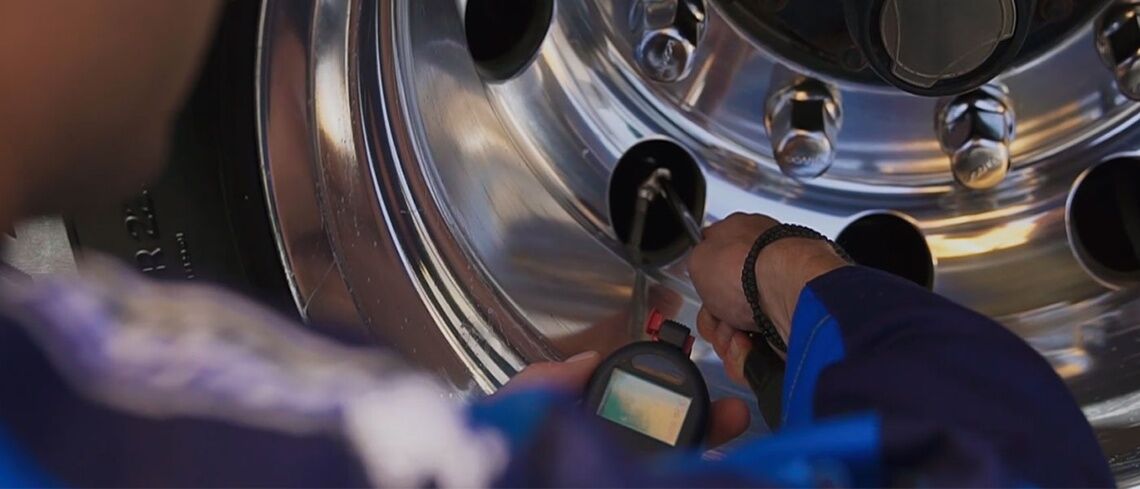
Why is truck tyre pressure essential for your business?
Applying and maintaining the correct inflation truck tyre pressure is key for optimum performance and safety. As we will see, it also avoids problems and allows you to optimise your fuel consumption. Find out what our experts have to say.View more -
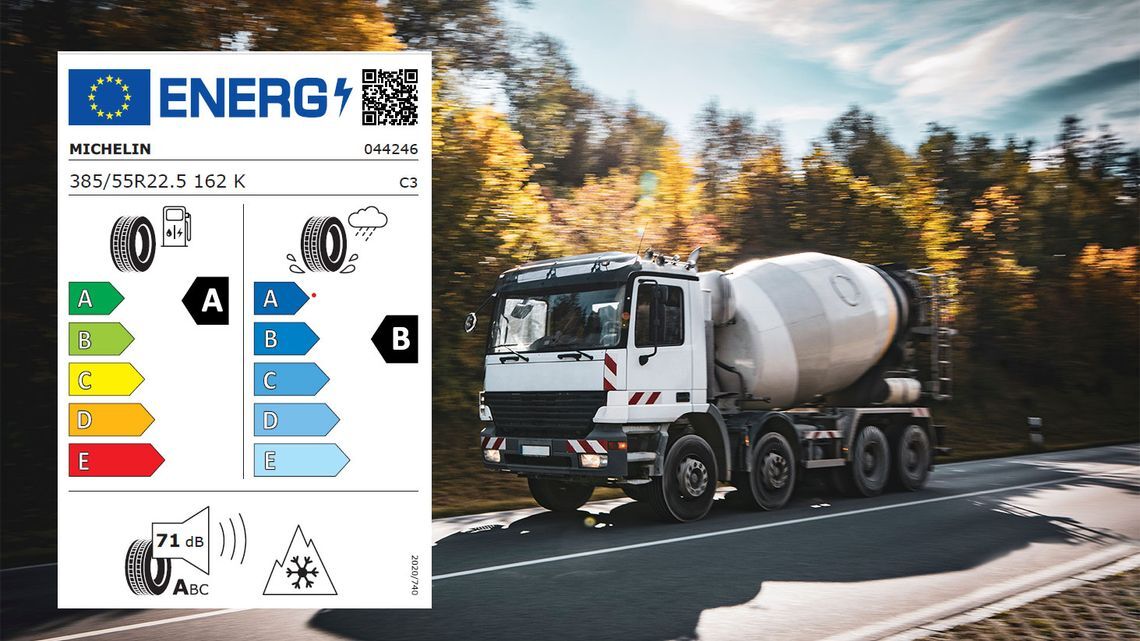
Make smarter tyre choices with the European tyre label
Since 2012 the European tyre label has helped fleet owners go beyond tread patterns and lifespan when choosing truck tyres by offering clear, standardised ratings for fuel efficiency, noise levels and wet grip tyre performance. Revamped in May 2021, EU tyre labelling system now makes it easier to find tyres that match your real-world needs—and starting in 2026, it also helps check your compliance with EU Taxonomy regulations. “Choosing the right truck tyres is not always easy,” explains Ana Gonzalez, European Product Marketing Manager for Michelin’s Long Distance Transport Business Line. “It’s important for fleet owners to understand that not all criteria on the European tyre label carry the same weight for every business.” Given the impact of these factors, fleet owners need to prioritise their criteria based on their use case. Keep reading to find the best fit for your fleet!View more -

Winter driving tips for truck drivers
Driving in extreme weather is challenging for both driver and truck. We turned to a Scandinavian expert(1) to compile a list of winter driving tips so that you and your truck are all set for snow, ice and freezing cold.View more
(1) Source: The Road Vehicles (Construction and Use) Regulations 1986
(2) Source: https://www.gov.uk/government/publications/use-of-tyres-aged-more-than-10-years-on-goods-vehicles-buses-and-coaches/tyre-age-restrictions-for-good-vehicles-buses-coaches-and-minibuses