
truck wheel alignment
How correct truck wheel alignment can reduce costs?

smooth even wear
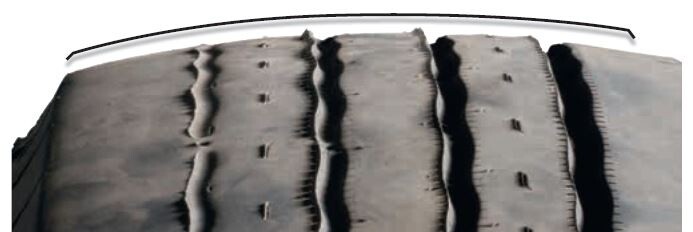
pronounced smudges

Schema to explain truck wheel aligment / misalignment
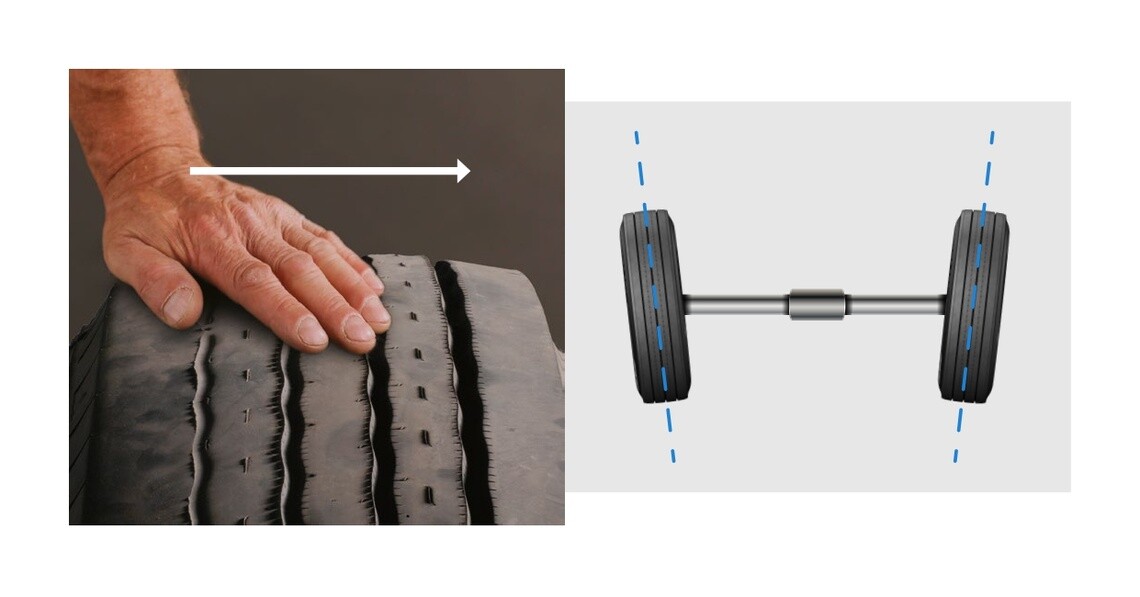
Toe-out
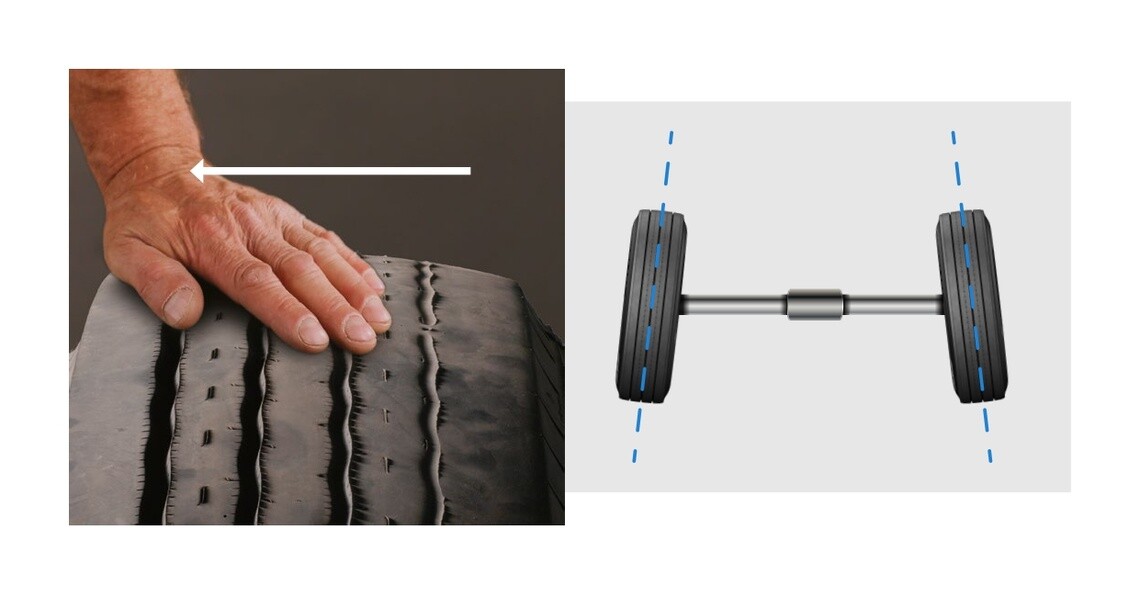
toe in
truck wheel alignment
Truck wheel alignment is a crucial, but often overlooked, aspect of vehicle maintenance. Poor alignment not only affects the driving experience, it also has significant financial repercussions. In this article, we'll look at how proper wheel alignment can help reduce maintenance costs while improving safety and efficiency.
SUMMARY
Adjusting a wheel alignment involves setting the angles of the truck's wheels to the manufacturer's specifications.
These adjustments involve three main factors:
When these angles are unbalanced, your truck's handling, fuel efficiency and tyre life are compromised.
Wheel misalignment can be caused by factors such as hitting potholes or kerbs, or by normal wear and tear. Regular wheel alignment ensures that all wheels run smoothly and optimises overall performance.
Tyres are among the most significant recurring expenses for a truck. Misalignment often causes one side of the tyre to wear faster than the other. This uneven wear reduces tyre life by about 7% per millimetre if alignment(1).
Proper truck wheel alignment distributes the load evenly across the tyre’s surface, allowing for uniform wear. This extends the life of your tyres and reduces the frequency of replacements. Over time, the savings on tyre costs alone can justify the expense of regular alignment checks.
Pinching / opening (mm) | Tyre life reduction (%) | Fuel consumption increase (%) |
1 | 7% | 0.7% |
2 | 14% | 1.3% |
3 | 21% | 2.0% |
4 | 28% | 2.7% |
5 | 35% | 3.3% |
Effect of alignment on the life of steered tyres
Misaligned wheels create additional resistance, forcing the engine to use more energy to maintain speed. This inefficiency results in higher fuel consumption, which can significantly impact your bottom line.
When your truck’s wheels are correctly aligned, rolling resistance is minimised, allowing for smoother and more efficient movement. For long-haul trucks, this translates into substantial annual savings on fuel.
A misaligned truck doesn’t just damage tyres, it places unnecessary stress on other components. Suspension parts, steering mechanisms, and even axles can suffer wear and tear when alignment is neglected. These parts are expensive to repair or replace, and failures can lead to vehicle downtime.
Regular truck wheel alignment prevents this cumulative damage by ensuring that all parts work in harmony. It’s a proactive measure that keeps your truck operating at peak performance while avoiding unexpected repair bills.
Spotting the signs of misalignment early can save you from expensive repairs down the line. Here are the key indicators:
Here are a few examples:
Smooth and regular wear sloping from one side to another, without feathering.
Flexing of the axle under the weight of the load – which may be more pronounced on the inner tyre of a twin wheel assembly.
smooth even wear
Presence of feathering at the edge of the tread blocks, more evident on one side than the other.
Most likely caused by incorrect alignment of the wheels (toe-in or toe-out) or axle misalignment:
pronounced smudges
1. Alignment of the front axle
A: Toe-in
B: Toe-out
2. Incorrect axle alignment
Schema to explain truck wheel aligment / misalignment
If you feel burrs when pushing your hand inwards, it’s a sign of toe-out
Toe-out
If you feel burrs when pulling your hand outwards, it’s a sign of toe-in
toe in
Paying attention to these symptoms ensures timely action, reducing the risk of further damage and keeping repair costs under control.
Many operators wonder how frequently they should invest in alignment checks. A general rule is to schedule an alignment inspection at least once a year.
However, if your truck regularly encounters rough terrain, carries heavy loads, or has recently hit a pothole or kerb, it’s wise to check alignment more frequently.
Finding a reliable alignment service is critical. Not all service providers have the expertise or equipment to handle heavy-duty vehicles. Look for a provider with experience in truck maintenance.
Maintaining proper truck wheel alignment is not just about keeping your vehicle on the road, it’s about reducing costs and maximising efficiency. By addressing alignment issues proactively, you’ll save money on truck tyres, fuel and repairs while ensuring your truck performs at its best.
Need more advice? Discover all MICHELIN truck tyre tips
(1) External documentation : TECHNICAL BROCHURE MICHELIN TRUCK TYRE - 2023
You are using and outdated Web Browser.
You are using a browser that is not supported by this website. This means that some functionality may not work as intended. This may result in strange behaviors when browsing round.
Use or upgrade/install one of the following browsers to take full advantage of this website


