What causes uneven truck tyre wear?

What causes uneven truck tyre wear?

What causes uneven truck tyre wear?

Uneven truck tyre wear affects driver comfort, reduces grip and overall safety and also shortens tyre lifespan.  These practical tips can improve truck tyre wear, avoid flat tyres and maintain optimal performance, safety and efficiency on the road. 

Tip 1: Choose the right tyre to avoid uneven truck tyre wear 

The right tyre for your use case 

Using the right tyre significantly reduces the risk of premature truck tyre wear ౼ that means rugged tyres for construction sites and fuel-efficient low rolling resistance tyres for long-distance transport. 

The right tyre for your engine 

Choose tyres designed for your truck’s power and workload to improve performance, truck tyre wear and safety.

  • Electric vehicles (EVs) deliver instant torque and rapid acceleration that can wear tyres faster, especially with aggressive driving.
  • Heavy-duty lorries generate excessive torque, causing heel-and-toe wear, where one side of the tread wears faster than the other. 

The right tyre for your application

Range

Usage

Highway

Main roads

Urban

Worksite

Off road

MICHELIN X® LINE TYRE RANGE

X

X

MICHELIN X® MULTI TYRE RANGE

X

X

X

X

MICHELIN X® WORKS TYRE RANGE

X

X

X

X

MICHELIN X® FORCE TYRE RANGE

X

X

MICHELIN X® COACH TYRE RANGE

X

X

X

MICHELIN X® INCITY TYRE RANGE

X

MICHELIN AGILIS RANGE

X

X

X

X

Tip 2: Routine inspections curb irregular truck tyre wear  

Tyre pressure impacts truck tyre wear 

Prevent uneven truck tyre wear by conducting regular, manual pressure checks or consider installing a Tyre Pressure Monitoring System (TPMS) to continuously monitor pressure. 

Uneven truck tyre wear due to overinflation

Uneven truck tyre wear due to overinflation

Uneven truck tyre wear in the centre due to overinflation
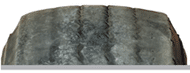
Uneven truck tyre wear due to underinflation

Uneven truck tyre wear due to underinflation

Uneven truck tyre shoulder wear from underinflation

Proper alignment plays a crucial role in truck tyre wear 

Adjust the wheel angles to the manufacturer’s specifications.
Have your vehicle aligned by a specialist as soon as you detect uneven wear ౼ such as burr wear with protruding edges ౼ or experience changes in handling or steering. 

Alignment of the front axle:

Toe alignment refers to the direction in which the wheels on an axle point relative to the vehicle’s centerline. It is typically measured as the difference in distance between the front and rear edges of the tires on the same axle.
Toe settings have a significant impact on a truck’s handling characteristics and straight-line stability, which are especially critical for heavy-duty vehicles due to their size and load.

Toe-in

Toe-in occurs when the front edges of the tires are closer together than the rear edges. Excessive toe-in can cause the outer shoulders of the tire tread to wear prematurely. This wear often appears as feathering, which can be felt by running your hand across the tread surface.

Alignment of the front axle: toe-in

Alignment of the front axle: toe-in

Toe-out

Toe-out is when the rear edges of the tires are closer together than the front. Too much toe-out leads to inner shoulder wear and similar feathered tread patterns.

Alignment of the front axle: toe-out

Alignment of the front axle: toe-out

Incorrect axle alignment

Incorrect axle alignment on truck

Incorrect axle alignment on truck

Correct load distribution improves truck tyre wear  

Rotating heavy cargo placement maintains even wear across all tyres. When transporting oversized loads, check tyre wear frequently ౼ especially on the shoulders ౼ as the added height can put uneven pressure on tyres. 

Inspect your twin tyres   

Skewed tread patterns on twin tyres cause by incorrect pairing

Skewed tread patterns on twin tyres cause by incorrect pairing

Skewed tread patterns on twin tyres caused by incorrect pairing.

When replacing a twin tyre, verify the tread depth gap between the old and new tyre is no more than 5mm (1) . Exceeding this legal limit can cause 
tyres to rotate at different speeds, leading to excessive truck tyre wear, which can compromise longevity and safety. 

Tip 3: Identify truck tyre wear patterns and causes with accurate diagnostic tools  

Regular tyre inspections ensure vehicle safety and maximise tyre longevity ౼ but even experienced fleet managers can overlook signs of uneven truck tyre wear. Staying vigilant about truck tyre wear is crucial for optimising tyre lifespan, improving safety and maximising efficiency.

Below the different steps to follow:

Choose the right truck tyre

Depending of your usage, choose right tyre could have a significant impact on tyre wear

Check tyre pressure regularly

Under or Overinflation could impact the tread tyre wear and reduce the tyre lifespan

Plan preventive maintenance actions

Establish a routine for checking your trucks and tyres.

Contact an expert

If you have any doubt about abnormal wear, contact your local dealer.

Other articles that may interest you:

You are using and outdated Web Browser.

You are using a browser that is not supported by this website. This means that some functionality may not work as intended. This may result in strange behaviors when browsing round.

Use or upgrade/install one of the following browsers to take full advantage of this website

Firefox 78+
Edge 18+
Chrome 72+
Safari 12+
Opera 71+