What are Radial Tyres?
Radial tyre meaning
There are several different types of tyre construction. Radial tyre construction is one of them. In 1946, Michelin patented the steel-belted radial tyre construction, revolutionising the industry with a steel belt and carcass threads arranged at right angles to the direction of travel.
Construction of Radial tyres
In a radial structure, one layer of cables radiates around the axis of the tyre. In addition, the crown consists of a second layer of plies forming a belt placed circumferentially around the tyre.
Discover the advantages of Radial PLY Tyres
Popular Michelin Radial Tyres
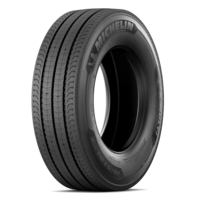
Michelin X MULTI ENERGY Z
Maximised energy efficiency with high mileage potential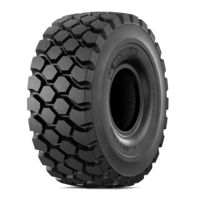
Michelin XTRA DEFEND
Designed to resist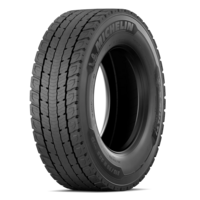
Michelin X MULTI ENERGY D
Maximised energy efficiency with high mileage potential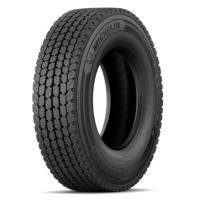
Michelin X COACH D
Your partner in safe passenger transport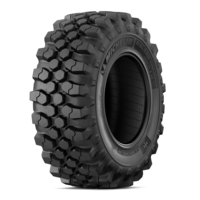
Michelin BIBLOAD HARD SURFACE
Long life with excellent ride quality


Expert tips and advice related to Radial Tyre
-
Crop Treatment: should you use bias or radial tyres?
While the choice between bias or radial tyres is crucial for the entire crop cycle, it is particularly important during the crop treatment phase. As we shall see, choosing one technology over the other can make all the difference in terms of soil protection. Which one will suit your needs? Find out in this article.Read article -

How to choose the right forklift tyre?
Selecting the correct forklift tyre directly impacts your operation's safety, efficiency, productivity, and uptime. Different working environments require specific tyre types. Moreover, understanding your load requirements, operating conditions, and tyre specifications ensures optimal performance while reducing downtime, maintenance costs, and fuel consumption. Want to know more? Check out the guide below for essential information and helpful insights.Read article -
How to Choose the Right Truck Tyres?
4 simple steps. That's all you need to choose the right truck tyres, as well as coach and construction machinery tyres. To make it easier for you, we explain each of these steps in this guide. Read on to find out all about it.Read article -

How to choose bus tyres for safety and comfort?
Choosing the right bus tyres is a crucial aspect of ensuring passenger safety, comfort, and operational efficiency. Tyres play a fundamental role in how buses perform under various conditions, impacting safety, noise levels, and long-term costs. Discover the essential criteria for choosing bus tyres and the Michelin ranges that meet them in every aspect.Read article -
Choosing the right tractor trailer tyres
Your agricultural trailer should not be fitted with just any tyres. You need them to be able to deliver certain performances in order to optimise your farming activities. What trailer tyres can we offer to optimise the performance? The answer is in this article.Read article
Frequently asked questions - Radial Tyre
ㅤ
Get an answer to your question
This depends on how you define a "normal tyre." As opposed to a bias-ply tyre, the construction of which features a crisscross pattern of cords running at angles, the radial tyre's internal ply cords are arranged at 90 degrees to the direction of travel. Michelin patented this innovation in 1946, revolutionising the tyre industry.
Due to these differing constructions, a radial tyre had different performance benefits as compared to bias-ply tyres. Radial tyres typically offer better traction, fuel efficiency, and wear resistance due to their flexible sidewalls and efficient heat dissipation. They also provide a smoother ride and enhanced stability, making them ideal for long-distance hauling. Bias-ply tyres provide advantages in certain off-road conditions.
For more information, please contact our Michelin experts.
In usage, a radial tyre will have a bulging at the bottom of the sidewall, given its flexibility. In agricultural applications, you would also notice it compacting soil less, given its larger contact patch. Otherwise, Michelin radial tyres can be identified by the X® in the tyre name or by an R in the size: 11R22.5. A bias-ply tyre would have a hyphen in the size: 11L-15.
As a tubeless tyre, it does not require an inner tube, instead using an airtight seal to maintain air pressure within the tyre itself.
Radial tubeless tyres are commonly used across various vehicles, including passenger cars, trucks, agricultural equipment, and more, offering superior performance compared to tube tyre constructions.