how will the eudr regulations and sustainable tyre composition impact your fleet

header how will the eudr regulations and sustainable tyre composition impact your fleet

Here’s how the EU’s upcoming regulation on deforestation-free products (EUDR) will impact your fleet

Published on 8 May 2025 - 5 reading minute(s)

The European Commission’s EUDR regulation aims to curb greenhouse gas emissions and boost global biodiversity by putting a stop to deforestation. We sat down with Romuald Houdoux, Michelin’s VP of Sustainability & Circular Economy, to understand what fleet owners need to know and how this regulation will impact their business.
 

The impact of the EUDR regulation on daily life

EUDR compliance will lead to drastic changes in the tyre raw

01 eudr compliance will lead to drastic changes in the tyre raw material harvesting


For fleet owners, staying on top of new regulations is an essential part of the job. Recently you may have already prepared yourself for the transition towards alternative fuels or the recent update of Tyre Pressure Monitoring Systems (TPMS) standards.

A new regulation will roll out across Europe and as consumers, we’ll experience first-hand the effects of the European Union Deforestation Regulation (EUDR regulations) even when we go to the supermarket. Whether buying chocolate, coffee or any consumer product that contains palm oil, you’ll likely see a change in packaging, marketing or even price.

The good news? All that change is for a good reason, the EU Deforestation Regulation aims to reduce greenhouse gas emissions resulting from deforestation and aid in the fight against global biodiversity loss.


How does the EU deforestation regulation protect our planet?

Regulators are taking a firm stance against deforestation by cracking down on the production and harvest of raw materials that have historically contributed to our environmental crisis. To ensure that products consumed by EU citizens no longer contribute to forest degradation worldwide, the European Commission implemented the EUDR regulations, which require companies to prove their operations are deforestation-free.


EUDR regulations: a catalyst for change

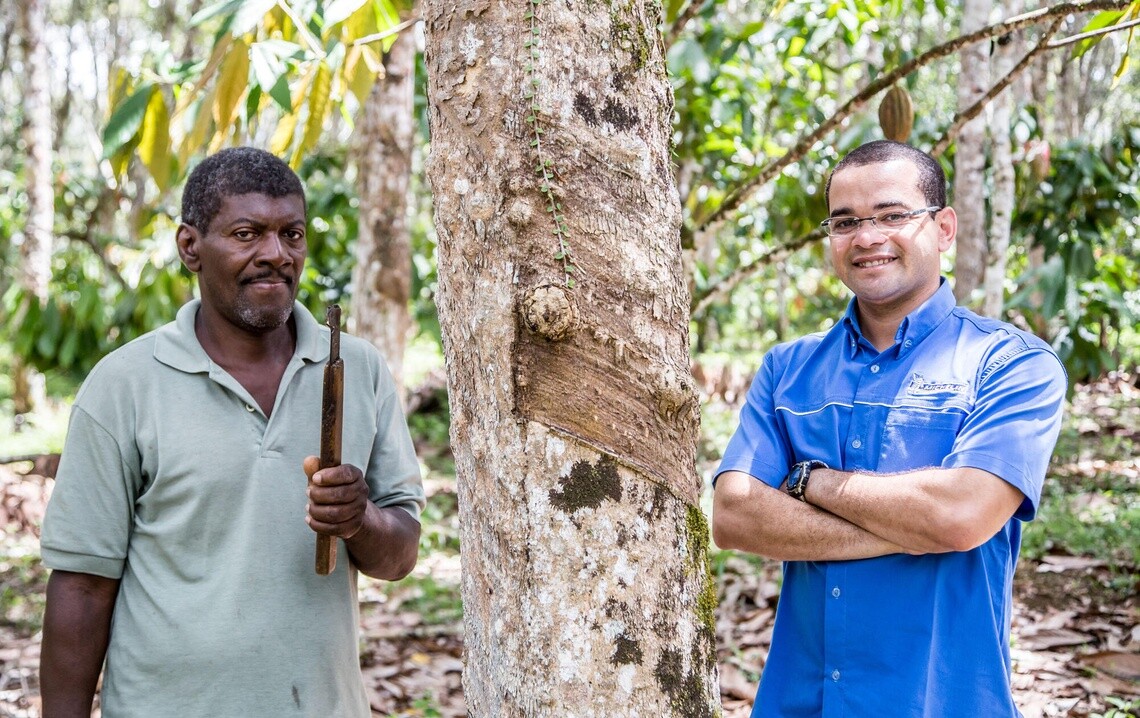
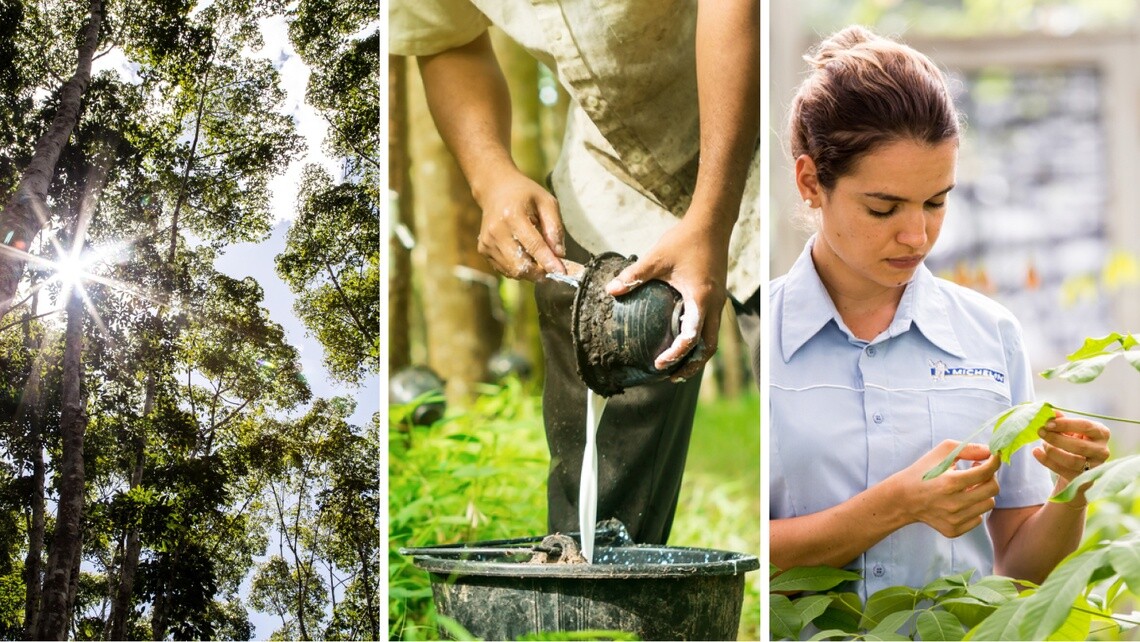
As you likely already know, tyre raw material is harvested on rubber tree farms, one of the many types of farmlands protected under this new regulation. The EU Commission has tasked consumer goods manufacturers like Michelin with collecting and reporting geolocation data from millions of farms where the natural rubber we buy comes from. This EUDR rubber data is crucial for verifying the legal production and traceability of the tyre composition such as natural rubber, ensuring it originates from deforestation-free sources and is segregated from natural rubber of unknown origin or non-deforestation-free sources.


The behind-the-scenes challenges of EUDR compliance

At Michelin, more than 85% of our natural rubber is sourced from a value chain(1) made up of millions of small, independent producers, many with just two to three hectares of land. This means that if your fleet is rolling on Michelin tyres, each one can contain rubber from tens of thousands of independent farms!(2)

Verifying that the traceability of our products meets these stringent standards requires significant investment both within the Michelin Group and by our suppliers, including high-resolution satellite data for accurate mapping. As an industry leader, we believe that it is our responsibility to champion fairness and eco-responsibility throughout our business.

At the same time, we are committed to working with the most vulnerable smallholders (small and remote farms) within our supply chains to avoid the risk of exclusion. Together with our natural rubber joint ventures and suppliers, Michelin began collecting the geographic coordinates as early as mid-2023, before the EUDR regulation came into application, to ensure a smooth transition and avoid any potential supply chain disruptions.
Michelin: pioneering the future of the tyre industry

Our commitment to the forests stretches back to 2015, when we made a public commitment to zero deforestation that was reflected in our natural rubber sourcing. In 2024, we strengthened our biodiversity objectives for 2030, reflecting our company's dedication to preserving nature. Now, with the adoption of the EUDR regulation, we're accelerating and expanding our commitments by providing tangible proof of the non-deforested nature of the rubber we use. 

So how can fleet managers ensure that they comply with EUDR requirements? Although the European Parliament ratified the one-year postponement of EUDR, pushing its application to early 2026, Michelin already has you covered. In addition to fully complying with the EUDR regulation for flows of all implicated products and components in Europe as of January 2025, 100% of the natural rubber used to manufacture Michelin tyres everywhere in the world will respect the requirements of EUDR regulation. In short, our proactive approach implements these standards globally, not just where regulations mandate it, demonstrating our leadership and dedication to a sustainable future, beneficial to all.

Our commitment to people, planet and profit

At Michelin, our All-Sustainable approach is deeply ingrained in our corporate strategy. We believe in creating value through a mutually beneficial and interdependent People, Planet and Profit approach. We demonstrate our commitment to reducing our environmental impact by setting ambitious sustainability targets ౼ notably 47% reduction in CO2 emissions (scopes 1 and 2) by 2030 and achieving Net-Zero by 2050.(3)

The future of tyre industry: how Michelin commit to people, planet and profit

02 the future of tyre industry how michelin commit to people planet and profit


EUDR regulation: an opportunity for fleet managers

As with many measures that aim to protect our planet and its precious resources, this additional effort will likely lead to additional costs and higher natural rubber prices. Why? Because the EUDR regulation requires players along the entire value chain to contribute to ensuring that natural rubber is produced in compliance with relevant legislation.

But there is an upside for European fleet owners: being aware of these new regulations will optimise procurement practices ౼ thus transforming fleets into active players in reducing their environmental footprint. In the coming months, you’ll need to begin checking with your suppliers and dealers to verify tyre composition and ensure that their products are fully compliant. Your responsible procurement will help to avoid any potential attempts by suppliers to avoid EUDR compliance.

For Michelin customers outside of the EU, this is an opportunity for you to stand out as a dedicated sustainability champion. Since the regulation only applies to products imported to, exported from or produced in Europe, fleets in other regions will still have the choice to buy tyres that meet the EU deforestation regulation or not. Purchasing from Michelin creates an opportunity to claim responsible procurement and to contribute to CO2 reduction ౼ a choice that your customers will surely value.

FAQ:

What is EUDR

EUDR regulations were created by the European Commission and will come into effect on December 30, 2025. These regulations require companies to prove that the production of raw materials used to create their goods does not contribute to the destruction of forests. For tyre manufacturers, that means verifying that tyre raw material comes from farms that are compliant with the EUDR regulation.

What does EUDR stand for

EUDR officially stands for the Regulation on Deforestation Free Products (EUDR).

What is the EU Deforestation Regulation

The EU Deforestation Regulation aims to reduce greenhouse gas emissions resulting from deforestation and aid in the fight against global biodiversity loss. The new rules apply if you “place on the EU market or export from the EU: palm oil, cattle, soy, coffee, cocoa, timber and rubber as well as derived products (such as beef, furniture, or chocolate)”. The regulation applies for any quantity of product, large or small.(4)

SOURCES:

1. Michelin. EU REGULATION ON DEFORESTATION-FREE PRODUCTS (EUDR) Presentation 2024: "In brief, a very complex and fragmented natural rubber value chain with millions of smallholders – more than 85% of worldwide production is done by smallholders on plantations of only 2-3 Ha. - and hundreds of thousands of middlemen -, in countries with different legislations, different cultures and above all huge disparities in terms of sustainability."

2. Michelin. EU REGULATION ON DEFORESTATION-FREE PRODUCTS (EUDR) Presentation 2024: "In brief, a very complex and fragmented natural rubber value chain with millions of smallholders – more than 85% of worldwide production is done by smallholders on plantations of only 2-3 Ha. - and hundreds of thousands of middlemen -, in countries with different legislations, different cultures and above all huge disparities in terms of sustainability."

3. Michelin.
https://www.michelin.com/en/sustainability/company/planet/climate-action

4. European Commission
https://green-business.ec.europa.eu/deforestation-regulation-implementation_en

You are using and outdated Web Browser.

You are using a browser that is not supported by this website. This means that some functionality may not work as intended. This may result in strange behaviors when browsing round.

Use or upgrade/install one of the following browsers to take full advantage of this website

Firefox 78+
Edge 18+
Chrome 72+
Safari 12+
Opera 71+