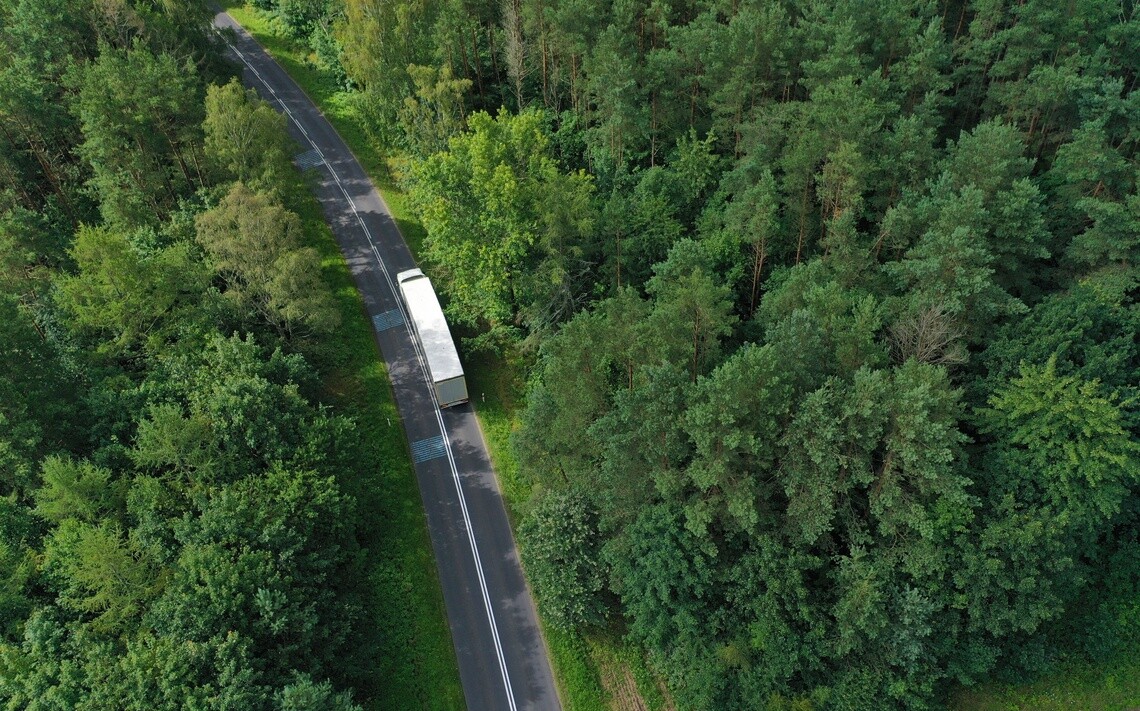
Aerial view of a truck driving along a road surrounded by dense green forest

Aerial view of a truck driving along a road surrounded by dense green forest

How Can You Start Boosting Your Sustainable Fleet Management Today? 11 Practical Steps You Can Act On Now
Published on 17 November 2025 - 5 reading minute(s)

Fleet efficiency and environmental performance are growing priorities in the transportation sector. With tightening regulations, rising fuel costs, and customer demands, fleets of all sizes are under pressure to lower their environmental impact. But for many operators, especially those with diesel fleets, the full shift to electric vehicles isn’t realistic yet, given today’s infrastructure limitations, high investment costs, and operational constraints.

That’s why Michelin created a practical new guide: 11 Quick Wins to Boost Sustainable Fleet Management 1.
 

Download our white paper about practical strategies to optimize fleet efficiency
Download our white paper about practical strategies to optimize fleet efficiency


What’s in the white paper, and who is it for?

Whether you're a fleet manager, owner-operator, CSR lead, or logistics executive, this white paper is designed to help your business take action towards sustainable practices.

Instead of asking you to make big investments or long-term commitments, it breaks down 11 cost-effective steps you can implement today, organized into four key areas:

  • • Vehicle
  • • Energy
  • • Driver
  • • Organisation

Each action comes with supporting data, practical advice, and insightful testimonials throughout.


What if electrifying your fleet isn’t feasible yet?

Full electrification is a long-term goal for many fleets, but for diesel-heavy operators, it's not a short-term reality. Limited vehicle availability, high upfront costs, charging infrastructure, and operational complexity all slow the shift.

This guide is built for the now, for those that need to meet fleet emission targets today using combustion-based vehicles. From tyre strategy to telematics devices to sustainable practices, each tip offers a way to reduce fleet CO₂ emissions and lower total cost of ownership (TCO) right away.


How can vehicle improvements reduce fleet emissions?

1. Expert tyre management solutions

Adopt low rolling resistance tyres, retreading, and regrooving. These practices, and more, can reduce fuel consumption and operating costs.

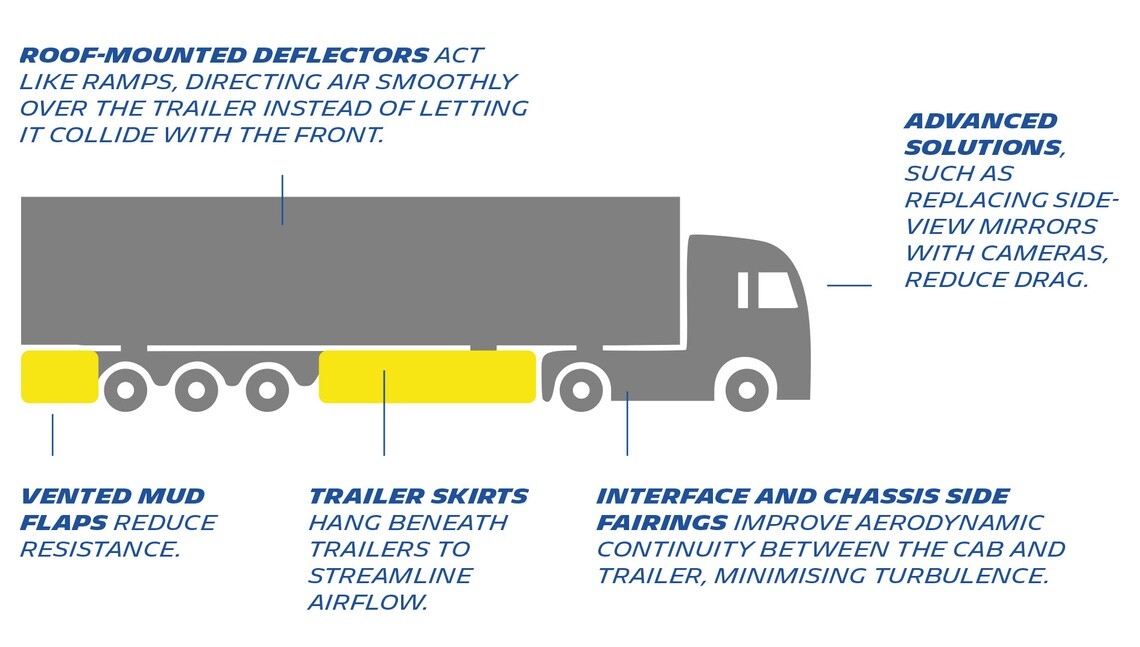
2. High-performance aerodynamic solutions

Simple add-ons for the entire fleet, like side skirts and deflectors, improve airflow and reduce drag.


Illustration of a truck showing aerodynamic solutions that reduce drag and fuel consumption, including roof-mounted deflectors, vented mud flaps, trailer skirts, interface and chassis side fairings, and advanced solutions like camera-based mirrors.

Illustration of a truck showing aerodynamic solutions that reduce drag and fuel consumption, including roof-mounted deflectors, vented mud flaps, trailer skirts, interface and chassis side fairings, and advanced solutions like camera-based mirrors.

3. Vehicle preventative maintenance

Implementing a formal maintenance plan for all vehicles and drivers can enhance monitoring, reduce your fuel consumption and boost efficiency. Timely repairs are key.

4. Optimising the powertrain

Use low-viscosity lubricants and manage internal engine friction for instant gains. For a more advanced solution, installing a turbo compounder in your truck can further improve fuel efficiency and cut emissions.


Which energy-related actions help lower emissions?

5. Transition to alternative fuels

Switching to practical, lower-carbon alternative fuels is a simple and cost-effective way to reduce emissions.

6. Advanced consumption monitoring

Implementing fleet management systems or telematics solutions can lower fuel consumption by 3–4%2—a small change for your business that adds up significantly over time.

7. Speed and idling

Monitoring and adjusting driving habits can yield immediate emissions reductions. Many modern vehicles come with built-in features that automate these actions, allowing drivers to focus on the road while saving fuel.


How can drivers directly influence sustainability?

8. Eco-driving programme

Educating drivers on efficient driving habits has been proven to lower fuel consumption by up to 15%3. Kick habits like harsh braking and speeding.

9. Good day-to-day practices

Raise employee awareness of basic behaviours like route anticipation and vehicle checks. Internal awareness programmes that highlight the economic and environmental impact of everyday habits help address challenges often missed in driver training.


Illustration of the fuel consumption impact of idling heavy trucks

Illustration of the fuel consumption impact of idling heavy trucks


Which organisational strategies best support sustainability goals?

10. Route optimisation

Use route optimisation tools to reduce mileage, delivery errors, and fuel use. A centralised fleet management system, such as MICHELIN Connected Fleet, can further optimise operations by assigning deliveries to the nearest available vehicle, accounting for road restrictions—such as bridge heights and weight limits—and rerouting vehicles to avoid congestion.

11. Load optimisation

Increasing load efficiency by reducing empty runs, consolidating loads, maximising vehicle capacity, and more can significantly lower emissions per kilometre travelled.


How can you start making these changes today?

Every fleet and its organisation are different, but the principles behind these quick wins apply across the board. Whether you implement one, three, or all eleven actions, you’ll make progress toward:

  • • Meeting internal fleet sustainability goals
  • • Complying with regulations (VECTO, GHG targets, etc.)
  • • Reducing total fuel spend
  • • Showing customers your commitment to responsible transportation
  • • Contribute to short-term emission reductions
  • • Demonstrate a commitment to continuous environmental improvement

Improving sustainability in transport doesn’t happen overnight. But with the right strategies, fleet operators can make meaningful progress. Michelin’s guide offers a practical toolkit to get started, with transparency about its scope and limits, and a focus on continuous improvement.


Get the full guide: download the white paper

You’ll get:

  • • Concrete data on fuel savings
  • • Practical checklists
  • • Expert testimonials
  • • Tips to start right away
Select a value
Fleet Dealer
common.error.invalidField:This field is invalid
Select a value
1 to 20 trucks 21 to 99 trucks More than 100 trucks
common.error.invalidField:This field is invalid

FAQ:

Why is tyre choice important for fleet efficiency?

Tyre choice plays a critical role in fleet efficiency: lighter tyres with lower rolling resistance help reduce fuel consumption, cutting both costs and CO₂ emissions. In addition, durable casing designs extend tyre life through retreading, helping fleets optimise efficiency while maximising the value of every tyre.

What are the most effective ways to lower fleet CO₂ emissions?

CO₂ emissions are closely tied to fuel consumption, so the most effective levers are those that directly improve efficiency. In our white paper, we talk about quick wins including using tyres with lower rolling resistance, adopting eco-driving practices, reducing idling, and optimising routes and loads, and more. Together, these measures can help increase efficiency significantly, without requiring major investments like full fleet electrification.

How can fleet managers reduce fuel costs quickly?

Fuel can represent a significant portion of fleet operating expenses, so even small savings add up fast. Quick actions include ensuring correct tyre pressure, switching to low-rolling-resistance tyres, educating drivers on eco-driving habits, and limiting idle time. These low-cost steps can begin to reduce consumption and help improve operating costs over time.

SOURCES

1 Mentions of “sustainable” in terms such as “sustainable fleet management,” “fleet sustainability,” or “sustainable mobility” are defined here as covering four dimensions: reducing environmental impact (Green), improving transport safety (Safe), supporting cost-effective mobility (Efficient), and ensuring access for all types of users and fleets (Equitable). This aligns with the S.E.G.A. pillars established by the Sustainable Mobility for All (SuM4All) initiative. www.sum4all.org

2  Average of the results obtained by Michelin from a representative sample of 20 clients in 2022.

3 Fleet Operator Recognition Scheme

Eco-driving for HGVs, Department for Transport. Dec 2016, p. 11

4. Objectif CO2 — Charte d’engagements volontaires de réduction des émissions de CO2 du transport routier de marchandises. April 2020, p.38.

5-6. Objectif CO2 — Charte d’engagements volontaires de réduction des émissions de CO2 du transport routier de marchandises. April 2020, p.40

You are using and outdated Web Browser.

You are using a browser that is not supported by this website. This means that some functionality may not work as intended. This may result in strange behaviors when browsing round.

Use or upgrade/install one of the following browsers to take full advantage of this website

Firefox 78+
Edge 18+
Chrome 72+
Safari 12+
Opera 71+