Developing an online strategy for truck businesses
Before doing just about anything, our immediate response is to “ask an AI” - and your customers are no different. In today’s hyper-digital world, building a strong online presence is no longer optional, it is a strategic necessity. To better understand how companies approach their online strategy and marketing strategies, we interviewed three fleet owners: one large group with over 1,000 employees, and two small fleets with fewer than 20 employees, including Mazet. Through their different perspectives, they share concrete experiences, challenges and practical insights.
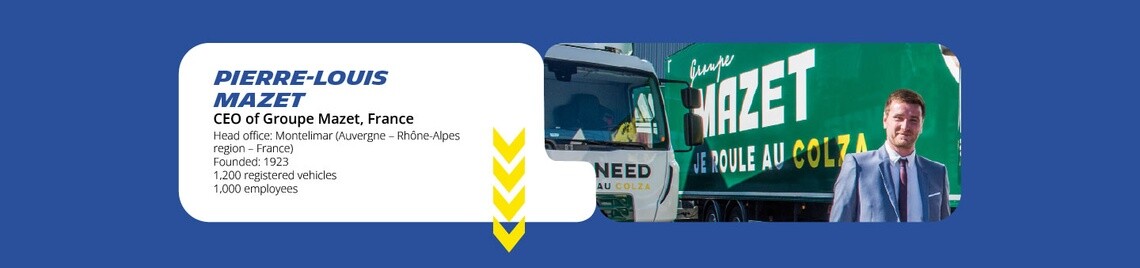
Pierre-Louis Mazet, CEO of Groupe Mazet, a French family business located in Montelimar (France) - Michelin for My Business.
Pierre-Louis, the past few years have been a period of change for Transport Mazet. Can you share a bit about that?
Yes, it’s been an intense but very constructive period. On a more personal level, following the loss of my father, Thierry Mazet, I took over the leadership of the company. My priority has been to preserve the values that have shaped the Groupe Mazet, while ensuring they continue to guide us forward. The fact that the Groupe Mazet has always been a family-run business says a lot about who we are ౼ both as a service provider and as an employer. We place great importance on making those values visible, particularly through our online strategy and targeted digital communications.
Transport Mazet recently brought its communication fully in-house. What motivated that strategic shift in your online strategy?
Bringing communications fully in-house was a very deliberate decision. It allows us to better control our messaging, set clear priorities, and manage costs more effectively. Of course, it also represents a significant investment in time and effort ౼ gathering information, producing content, validating and refining it all takes work. But despite the workload, this approach gives us greater agility and authenticity.
When defining your online strategy, how did you decide which digital channels actually matter?
We made some very clear choices when defining our marketing plan for digital marketing. LinkedIn is our top priority. It’s the simplest and most effective channel for visibility, and most importantly, our audience is already there. Our second priority is our website, because it’s essential for credibility. If someone is searching online for a transport company and you don’t show up, you’re simply not considered. In our sector, many companies either don’t have a website or are working with something outdated, which is a real issue.
Meanwhile, some rely almost exclusively on Facebook. That can work for certain activities, but if I’m searching for a transport company, Facebook isn’t where I’ll look. So our online strategy is very clear: LinkedIn, supported by a strong, well-maintained website.
From an online strategy perspective, what role does content creation play today?
As a group, we do a good job when it comes to the quality of what we publish, particularly on LinkedIn. Our posts are well-written and reflect who we are. Where the real challenge lies is in scaling that effort and structuring it over time.
Creating more in-depth content ౼ such as press materials, articles or testimonials ౼ requires more coordination and a clearer framework. We’re still in the process of fully structuring our content marketing strategy, especially when it comes to enriching the website and supporting it with more regular, long-form content.
Do emerging tools like AI agents influence how you think about your online or marketing strategy?
Not in a significant way – yet! Today, we’re in an observation and testing phase. We’re thinking about how AI agents could support content production and improve efficiency.
How does visibility fit into your digital marketing plan today?
In the past, we produced more press content and articles, but over time we felt we were repeating the same topic, which made the messaging feel redundant. Today, thanks in part to our partnership with Michelin, we’re able to broaden our range of topics. That opens up new opportunities and helps us rethink visibility more strategically.
Your group has a clear long-term strategy. How does that shape your online strategy?
We have a clear horizon: 2030, supported by a five-year vision that guides all our actions. Recently, we also formalised this direction through the launch of 10 guiding pillars, which help structure our strategy around two core priorities: international development and environmental commitments. This framework gives us a strong foundation and helps ensure our communication is aligned and coherent.
Where we still need to make progress is in how clearly this vision comes through across our digital channels. For example, our website visitors don’t always get a clear picture of who we are, our history, our leadership, or our societal commitments. That’s exactly why the group is now gearing up to relaunch the website, with the aim of addressing these gaps. For our online strategy, consistency across channels is essential.
Engagement is a challenge for many companies. How does that look for you?
Engagement is something we’re actively developing. While not everyone comments or shares, our posts are reaching a growing audience. In less than 2 years, we’ve doubled our community ౼ from around 3,000 to 6,000 followers.
We’ve also been experimenting with different posting times and formats to see what resonates best. Even if interactions aren’t maximised yet, the fact that people are following and paying attention is a positive sign.
How have recent changes in your business influenced your marketing and communication strategies?
One significant change has been our client base. During COVID, our revenue grew a lot with B2C and B2B2C clients. Today, nearly half of our top clients sell directly to consumers.
This shift affects how we communicate. We’ve become much more visible to private customers, which brings new opportunities and challenges. Delivering to individuals is more complex and with supply chain delays, transport companies can end up taking the blame.
As a result, we needed an online reputation management strategy as part of our overall online strategy. We’re focusing on showing the quality, care, and reliability that define Transport Mazet, while communicating clearly and effectively to all audiences. For example, we’re currently working on an animation that shows the journey of a shipment at Mazet. Visually explaining what we do could help people better understand the complexity of our work.
Can you share some digital marketing tips for smaller transport companies with limited budgets?
First, visibility. If you’re not present, you’re not consulted. In my opinion, regular LinkedIn posting is the simplest lever. Then a clear website. A simple but coherent online strategy based on clear messaging and consistency goes a long way in terms of credibility and visibility.
Looking ahead, how do you plan to sustain your online strategy?
Every marketing technique we invest in has to make sense. With that in mind, we’re focusing on maintaining rhythm on social media and on the website. We’re also testing new formats ౼ video, animated content, drone footage ౼ and improving our photography and video quality.
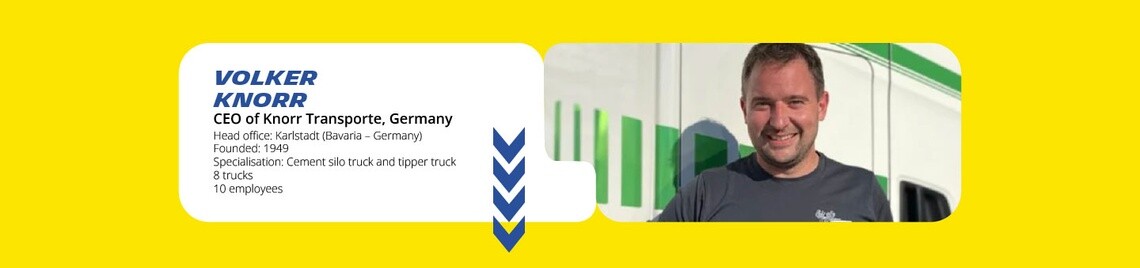
Volker Knorr runs the german company Knorr Transporte with his father - Michelin for My Business
Knorr Transporte is a small German family-run transport business for rubble and building materials. Volker Knorr runs the company with his father. He answered our questions in his truck on his way to visit a customer!
Is a digital marketing strategy essential to business development according to you?
Yes! Advertising is crucial. ‘Advertise or die’, it’s that simple. Knorr Transporte used to buy advertising space in local newspapers: but that strategy is no longer relevant. Today, we work with a communications agency to create our digital marketing strategy.
What is your main goal?
The main objective of our online presence is to get new customers and communicate about our services.
Talking about online presence, are you on social media?
Yes, primarily Facebook. I don’t think Twitter and Instagram are really relevant. LinkedIn, known as the most popular BtoB social media platform, is not suitable for us either.
And how do you use Facebook?
We don't have any paid advertising, instead, we showcase our company, share pictures, etc. Some of our videos attract up to 70,000-80,000 viewers! Getting more than 100,000 clicks is not uncommon either.
Tell us, how do you attract prospective clients to your website? (SEA - SEO?)
SEA (Search Engine Advertising)1 and SEO2 are of course an important part of our digital strategy. However, this task is entirely handled by our communications agency. KPIs are monitored via Google Analytics and key figures are regularly analysed by an agency expert.
Would you share with us your annual budget for your online strategy?
The total annual costs for the company's online presence is roughly 3,000 € (Google advertising, website maintenance, etc.).
Can you give us some key tips?
We constantly learn from our mistakes. For example, over communicating about your business is a no-go. You have to remember that your competitors are also monitoring your online activity. That means not mentioning customer names or only publishing detailed information once a contract ends. But the positive effects outweigh the negative!
post ontheroadwith online strategy title3
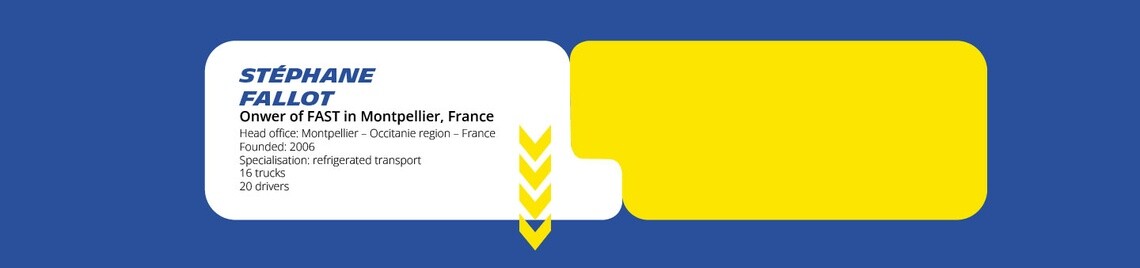
Stéphane Fallot, manages a fleet of 16 trucks. He is the owner of FAST in Montpellier (south of France). He tells us why he still doesn't have a website, and instead, a Facebook page with nearly 14,000 followers.
When did you launch your Facebook page?
I created the Facebook account for FAST five years ago. I mainly share pictures of trucks. It has no commercial purpose. It’s more of a social tool to share my passion for trucks with a whole community of truck enthusiasts. You know, one post has generated 240,000 likes. I am the community manager and I spend about 5 to 6 hours per month and I post images every two days.
And do you use other social networks for your business?
Not at all. I have a personal LinkedIn account. During the first lockdown last year, I posted frequently and I really appreciated the online solidarity.
Why have you chosen not to create a website?
I find that websites are restrictive. I’m in an industry that has been slow to digitize, and I think many are not yet ready for this transformation ౼ even if we remain very connected. We communicate a lot with our mobile phones. I am looking forward to the future. I know things are accelerating.
How do you develop your business?
A lot of our business is word of mouth. For the moment, it’s enough for me.
5 TIPS TO BOOST YOUR COMPANY'S ONLINE VISIBILITY
Increasing brand awareness and online visibility is key for your marketing strategy. Although it takes time and effort, you don’t need a big budget to develop your digital brand.
1. Create your own website for free : A website is the online identity of your business. Your customers expect you to have a digital presence, where they can find information about you, your services, your values, and even your job offers. Nowadays, you can quickly set up your website using tools such as Webflow or the more traditional WordPress. They both offer useful templates and can be customized according to your business needs.
2. Think about organic referencing (SEO): Organic referencing is essential if you want to boost search engine visibility. This visibility will attract traffic to your company's website. Regularly publishing news on your website invites Google to crawl through and index new content.
3. Use SEO tools : SEO tools make it simpler and easier to manage and monitor your search engine rankings. To ensure that your website is both search friendly and optimized, you can start with free versions of SEMrush or Moz.
- 4. Choose the right social media: The biggest social media mistake small business owners often make is to set up accounts on every social media platform at once. Don’t waste your time! Instead, start directly with LinkedIn, known as the number one professional social network with 310 million monthly active users.
5. Publish and share regularly: You don’t need to be a journalist to regularly publish and post information about your company or your industry. As the saying goes, “a picture is worth a thousand words"... so just share a photo! Regularly publishing content creates links to different pages on your website and avoids “dead-end” pages. This can be a good way to boost pages that are struggling to rank in search engines.
An online strategy is created by first clarifying what the company wants to express, then structuring content around the most relevant digital channels. Content creation should focus on quality, authenticity and consistency across channels.
A digital marketing strategy is a set of deliberate choices about visibility, channels, content, and messaging that support the company’s broader business objectives. You can start by defining priority channels, focusing on building credibility online, and maintaining regular activity.
A successful online marketing strategy ensures a company is visible, credible, and understood by its audiences. It is a mix of regular presence on key platforms and clear messaging around the company’s key values, commitments and activities.
An online business strategy defines how a company builds visibility and credibility across digital channels to support its broader business goals. It relies on clear messaging, consistent presence, and deliberate choices about the platforms and content that matter most to its audiences.
1. SEA is the process of advertising directly on Google and other similar search engine. It’s also Known as Pay-per-click.
2. SEO is the process of improving the quality and quantity of website traffic to a website or a web page from search engines.
Interviews were conducted in 2021 for Knorr and Fast. And in 2026 for Groupe Mazet.

gettyimages 930571046
car going fast on a road by night