Truck refueling at sunset at a busy truck stop, highlighting fuel consumption in long-haul transportation

00 truck refueling at sunset at a busy truck stop highlighting fuel consumption in long haul transportation

Filling the fuel tank of a truck at a gas station.

Fuel Fleet Management: cutting costs and preparing for the future

Published on 8 December 2025 - 5 reading minute(s)

Across Europe, fuel prices have been on a dramatic climb, reshaping the economics of transport. For operators, especially smaller fleets, these prices put profit margins under real pressure - making fuel fleet management a critical survival strategy. A comprehensive fleet audit is the first step toward decarbonisation, helping you analyse fuel purchases and other operational data to support informed decisionmaking. How can small fleets save fuel to limit the damage? To explore this topic, we sat down with Stefan Meier, Managing Director of the Spedition Schultz & Sohn and Bernd Moser, General Director of Eutiner Spedition.

How can small fleets save fuel to limit the damage? To explore this topic, we sat down with Stefan Meier, Managing Director of the Spedition Schultz & Sohn and Bernd Moser, General Director of Eutiner Spedition.

Graph illustrating rising fuel costs impacting truck fleet management

01 graph illustrating rising fuel costs impacting truck fleet management

Finance Capital banking and investment concept, Double exporsure stacked of coins and city with graph mixed media.

The scale of the challenge

In March 2022, at the start of the war in Ukraine, fuel prices spiked to an all-time high, at times reaching €1.99 per litre. Although prices have since dropped, averaging €1.61 per litre in Europe, the cost of fuel remains historically high1.

And let’s not forget that fuel is one the biggest expenses for fleets. In fact, fuel alone can make up about a quarter of total operating costs of a long haul truck. For a fleet of 35 heavy duty vehicles, even a small rise in price can add tens of thousands of euros in monthly expenses2.

In this economic context, fuel fleet management is more important than ever.

Our trucks consume between 27 and 32 litres per 100 kilometres - a huge cost factor! So I try to reduce consumption; which is to say we try to be fuel efficient with our driving.” - Stefan Meier (Managing Director of the Spedition Schultz & Sohn)

undefined Video

What are effective fleet fuel management solutions

There are several practical ways to reduce fuel consumption - some rely on technology, while others come down to driver behaviour and day-to-day habits.

Behaviour and training

Instilling a strong culture of responsibility is the first step towards a truly fuel efficient fleet. A fuel fleet management system is the perfect place to start. It helps identify inefficiencies while also motivating drivers. Studies have shown that when drivers know their fuel consumption is being monitored, they naturally adjust — reducing consumption by 3–4%3.

I regularly calculate the fuel consumption of each truck. If there’s a deviation, I discuss it with the driver.” - Stefan Meier, Managing Director, Spedition Shultz & Sohn.

Encouraging eco-driving and promoting good driving habits can push savings even further. Training in techniques such as smooth acceleration and braking, maintaining steady speeds, and anticipating road conditions can reduce the vehicle’s consumption by up to 15%. Intelligent cruise control, which integrates real-time road topology and traffic data, can add savings of 1.5% on steep inclines and up to 4% on hilly terrain4.

Another major culprit is idling. Heavy trucks burn around 3 litres of fuel per hour at idle, and idle time can account for up to 6% of total fleet consumption5. Automatic engine shut-off systems, which stop the engine when the parking brake is engaged, deliver significant reductions.
 

Cut fuel costs the smart way:

“The driver is the most important piece in this puzzle,” says Tomasz Leki, CEO of Poland’s Transport Krajowy i Międzynarodowy. With eco-driving techniques, trained drivers can cut fuel use by 2 litres per 100 km. That’s up to 20,000 litres saved every year.”

Discover what other fleet managers and drivers say about eco-driving.
 

Fleet renewal and new technology

While the industry awaits full-scale electrification, today’s modern diesel trucks are significantly more efficient than older models. Manufacturers have invested heavily in engines, aerodynamics, and telematics - connected systems that track speed, location, driving patterns, and even tyre pressure. These insights and datas allow managers to implement fleet fuel management solutions that identify
inefficiencies, optimise routes, and guide training. Telematics can lower fuel use by an additional 3-4%3.

“Personally, I rely on modern technology - we regularly replace our trucks, and each new generation brings fuel savings from the manufacturers.” - Stefan Meier, Managing Director, Spedition Shultz & Sohn

Technological aids further strengthen results:

  •        • Speed limiting at 80–90 km/hr can deliver 5% savings on long-distance routes6.
  •        • Aerodynamic modifications reduce consumption by 7–8%, equivalent to 83 grams of CO₂ per km7.
  •        • Automatic engine stop/start systems cut consumption by 1–6% depending on route type and stop duration8.

Tyres: a hidden lever

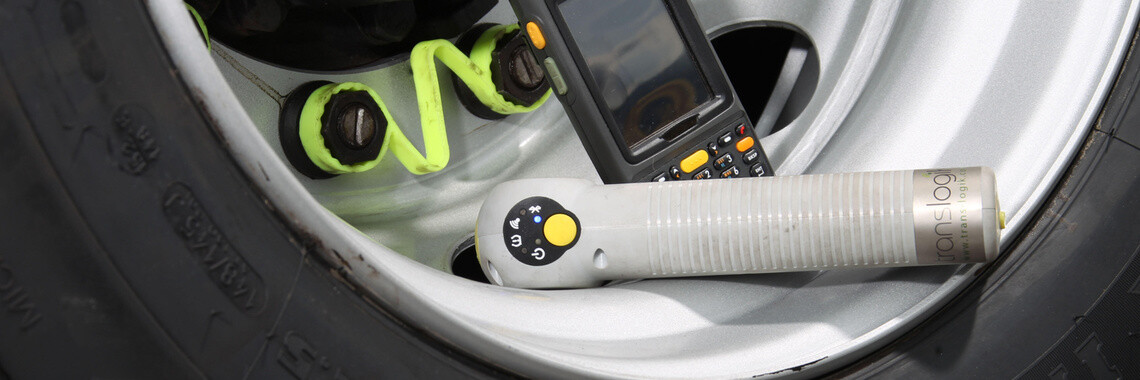
Tyres are one of the most powerful, and often overlooked, tools for reducing fuel consumption. For urban or mountainous routes, tyres account for around 20% of fuel consumption. On long-distance hauls, that figure rises to 35% of the mechanical energy required to move a truck9.

Did you know that the right tyre choice can generate immediate benefits?

       • Switching from grade B to grade A low rolling resistance tyres saves around 0.8 litres per 100 km10.
       • For a 50-truck fleet, that adds up to annual savings of nearly €65,00011.

And monitoring pressure is just as important:

       • 1.5 bar under-inflation = 8% more rolling resistance12.
       • Across all 12 tyres on a truck, this raises fuel consumption by:
                 • 1.5% on regional trips13.
                 • up to 2% on long-haul routes13.

“In long-haul transport, we focus on energy-saving tyres. We use Michelin tyres, and over the years we’ve had the best experience with them in terms of durability, performance, and noise levels.” - Stefan Meier, Managing Director, Spedition Shultz & Sohn

Managing today, preparing for tomorrow a fuel efficient fleet

High fuel prices are not going away - but the good news is that fuel fleet management technology, smarter driving, and better tyre practices are already helping operators cut costs.

Hybrid strategies - combining the gains of efficient diesel with gradual integration of renewable and alternative fuels - are also taking hold across the industry. Hydrogen and electric solutions will play a growing role, but until then, companies must strike a balance between reducing current costs and future-proofing their operations.

In this environment, the role of a robust fuel fleet management system cannot be overstated. It is the backbone for creating a fuel efficient fleet, managing fleet management costs, and implementing scalable fleet fuel management solutions. 

Ultimately, the companies that succeed will be those that view fuel fleet management not as a defensive measure, but as a proactive strategy - reducing costs today while steering fleets toward a more sustainable future.

What is a fleet fuel management system?

A fleet fuel management system is a connected solution that tracks fuel use, identifies inefficiencies, and helps managers and drivers reduce consumption. They are designed to be intuitive for users, offering dashboards and alerts that simplify decision-making and encourage proactive fuel-saving actions.

How do you monitor fleet fuel consumption?

Managing fleet fuel costs requires a combination of fleet fuel management solutions, including telematics, eco-driver training, GPS tracking, speed and idling controls, and optimised tyre selection and maintenance.

How driver behaviour affects fleet fuel management?

Driver behaviour is a major component of a fuel-efficient fleet, with techniques like smooth acceleration, steady speeds, and reduced idling lowering fuel consumption by up to 15%.

Sources

1. Interview of Stefan Meier:
At the beginning of 2021, prices were still reasonable—around €1.06 per liter. By mid-2021, they rose to €1.20–€1.25 and stayed stable for a while. The real shock came after the invasion (of Ukraine): in March, prices suddenly jumped to €1.75–€1.99. I bought a batch at €1.99, the highest price I’ve ever paid. With our low profit margins, we have to pass the costs on directly.

2. Our White Paper about practical strategies to optimize fleet efficiency, page 12; Lien de l’article une fois qu’il sera en ligne. Objectif CO2 — Charte d’engagements volontaires de réduction des émissions de CO2 du transport routier de marchandises. April 2020, p.43.

3. Our White Paper about practical strategies to optimize fleet efficiency, page 12; Lien de l’article une fois qu’il sera en ligne. Average of the results obtained by Michelin from a representative sample of 20 clients in 2022.

4. Our White Paper about practical strategies to optimize fleet efficiency, page 15; Lien de l’article une fois qu’il sera en ligne. Fleet Operator Recognition Scheme — Eco-driving for HGVs, Department for Transport. Dec 2016, p.11. & Our White Paper about practical strategies to optimize fleet efficiency, page 13; Lien de l’article une fois qu’il sera en ligne. Objectif CO2 — Charte d’engagements volontaires de réduction des émissions de CO2 du transport routier de marchandises. April 2020, p.187

5. Our White Paper about practical strategies to optimize fleet efficiency, page 13; Lien de l’article une fois qu’il sera en ligne. Objectif CO2 — Charte d’engagements volontaires de réduction des émissions de CO2 du transport routier de marchandises. April 2020, p.38.

6. Our White Paper about practical strategies to optimize fleet efficiency, page 13; Lien de l’article une fois qu’il sera en ligne. Objectif CO2 — Charte d’engagements volontaires de réduction des émissions de CO2 du transport routier de marchandises. April 2020, p.223

7. Our White Paper about practical strategies to optimize fleet efficiency, page 7; Lien de l’article une fois qu’il sera en ligne. Objectif CO2 — Charte d’engagements volontaires de réduction des émissions de CO2 du transport routier de marchandises. April 2020, p.52.

8. Our White Paper about practical strategies to optimize fleet efficiency, page 13; Lien de l’article une fois qu’il sera en ligne. Objectif CO2 — Charte d’engagements volontaires de réduction des émissions de CO2 du transport routier de marchandises. April 2020, p.40

9. Our White Paper about practical strategies to optimize fleet efficiency, page 5; Lien de l’article une fois qu’il sera en ligne. European Commission — A Consumer’s Guide to Energy-Efficient Tyres, 2015, p.1.

10. Our White Paper about practical strategies to optimize fleet efficiency, page 5; Lien de l’article une fois qu’il sera en ligne. Comparing CO2 emissions of standard 445kW/12.7l tractor-trailer ensemble equipped with MICHELIN X® LINE ENERGY™ Z2/D2/T with grade A labeling for rolling resistance and the same vehicle equipped with MICHELIN X® LINE ENERGY™ Z/D/T with grade B labeling in rolling resistance, in long haul usage and average cargo load of 17t.

11. Our White Paper about practical strategies to optimize fleet efficiency, page 5; Lien de l’article une fois qu’il sera en ligne. Simulation of an average saving of 0.8l/100km over the life of the tyre between an A-labelled tyre and a B-labelled tyre, achieved by a vehicle travelling 150,000 km per year, on a total fleet of 50 vehicles, with an assumed price per liter of €1.45.

12. Our White Paper about practical strategies to optimize fleet efficiency, page 6; Lien de l’article une fois qu’il sera en ligne. Société de Technologie Michelin — Le pneu : Résistance au roulement et basse consommation. 2003, p.83. 

13. Our White Paper about practical strategies to optimize fleet efficiency, page 6; Lien de l’article une fois qu’il sera en ligne. Based on an internal Michelin calculation in 2025 using the VECTO calculation tool, using a 44-tonne truck example (4x2 tractor-trailer ensemble) with5kg/t as the mean rolling resistance of a long-haul tyre and 5.4 kg/t as the rolling resistance impacted by an 8% increase due to under-inflation.
 

You are using and outdated Web Browser.

You are using a browser that is not supported by this website. This means that some functionality may not work as intended. This may result in strange behaviors when browsing round.

Use or upgrade/install one of the following browsers to take full advantage of this website

Firefox 78+
Edge 18+
Chrome 72+
Safari 12+
Opera 71+