Electric truck by DELANCHY driving through a city street, showcasing sustainable transport solutions, clean energy logistics, and the future of urban mobility

00 electric truck by delanchy driving through a city street showcasing sustainable transport solutions clean energy logistics

Alternative energies are driving transport sustainability

Published on 24 October 2025 - 7 reading minute(s)

The race to decarbonise is reshaping the future of transport sustainability ౼ especially as regulators, manufacturers, and customers are pushing for cleaner solutions. Electric trucks, biogas, biofuels, and hydrogen represent a wide range of technologies in play, yet no single technology has emerged as the clear winner. The road ahead will require innovation, collaboration, and investment in sustainable transport solutions that balance efficiency, cost, and climate impact.

To help navigate the evolving alternative energy landscape, we sat down with Jean-François Beaupère, Global Product Planning at Michelin, and Yannig Renault, Technical Director at Delanchy — a French pioneer in refrigerated freight and an early adopter of transport sustainability.


Electric trucks from DELANCHY and FARGIER parked outside a modern building, representing sustainable transport development and clean energy logistics in urban environments.

01 ele 1


Decarbonising transport: how Delanchy moved from experimentation to strategic diversification

Five years ago, Michelin sat down with Delanchy, as the company embarked on a bold journey into alternative energies ౼ testing every viable option on the market.

Since then, Delanchy has expertly navigated the shift towards greater sustainability, scaling up operations and proving that investment in sustainable transport development pays off. Starting with just two electric trucks, Delanchy has expanded its 1,000-vehicle fleet to include ten 16- and 19-tonne lorries ౼ and plans to reach fifteen by the end of 2025. At the same time, their biogas fleet has grown from 40 to 47 trucks. Their evolution mirrors a broader industry movement from experimentation toward more elaborate strategies that prepare fleets for the future of sustainable transport in cities and on regional and international routes.

Regulation shapes sustainable transport development

The regulatory environment has become one of the most powerful forces shaping transport sustainability. Across Europe, policymakers are combining incentives and penalties to accelerate the shift away from diesel. For example, with VECTO regulations in place, manufacturers now face fines if they fail to achieve a 15% reduction in CO₂ emissions by 2025 and 45% by 20301. These regulations will also impact toll fees for diesel trucks, while electric vehicles benefit from exemptions in markets such as Germany ౼ tipping the cost equation toward sustainable transport solutions.

Market expectations are just as influential. Major retailers and distributors increasingly require low-carbon freight as part of their own environmental strategies. For transport operators, offering the benefits of sustainable transport has moved from a branding advantage to a business necessity.

Electric trucks: The front-runner in sustainable transport solutions

Electrification has emerged as the leading contender in the race for transport sustainability, and Delanchy’s growing electric fleet underscores this trend. Although initial projections2 suggested electric trucks could reach 30 to 50% market share by 2030, reality is proving more challenging. In 2024, heavy-duty electric trucks represented just 2.5%3 of the European market.

Why the slowdown? For starters, high upfront costs remain a key obstacle, along with infrastructure bottlenecks. Some companies even reported needing to invest roughly €1 million to upgrade depot infrastructure and grid connections before adding electric trucks to their fleets ౼ a significant hurdle even for businesses committed to sustainable transport development. Range limitations also persist, particularly for long-haul operations where charging options are more limited.

Even so, momentum is growing. Mercedes’ new eActros now offers a 500-kilometre range, Tesla’s Semi delivers 500 miles (around 800 kilometres), and new options from China are beginning to intensify competition. “These advances suggest that 600 to 1,000 kilometres of range could soon become standard, making electric trucks viable for many more routes,” says Jean- François Beaupère. Combined with EU regulatory pressure, including a 90 percent reduction target for truck CO₂ emissions by 2040, the shift to electric vehicles is no longer a question of if, but when.

Download our white paper about electric trucks for expert insights

White paper about electric trucks for expert insights

Biogas and biofuels: valuable but limited examples of sustainable transportation

Biogas and biofuels, produced from agricultural and organic waste, creates a closed carbon loop in which the CO₂ emitted during combustion was already captured by plants. “This makes biogas and biofuels a valuable component of sustainable transport development,” says Jean-François Beaupère. “Particularly in markets such as Germany, where it accounts for roughly 13% of the total energy supply.” However, biogas faces limits on feedstock availability and competes with agriculture for resources.

Delanchy’s experience reflects the broader complexities of transport sustainability. “Five years ago, bio-NGV was the most developed solution,” explains Yannig Renault. “So, we made major investments in bio-NGV. We’ve learned that it's a bit restrictive because the vehicle has to have specific adaptations.” The company is now preparing to switch to XTL ౼ a next-generation biodiesel made from waste, cooking oil, and even plastic waste ౼ which can be used in all vehicles without special equipment. “In terms of performance, it's very good,” Renault adds. “However, it costs around 20 cents more per litre than traditional diesel. So, we need our customers to be willing to pay more for a more sustainable option.”
 

DELANCHY electric truck labeled “ZE 100% ELECTRIQUE”, representing zero-emission logistics in urban areas

02 delanchy electric truck labeled ze 100 electrique representing zero emission logistics in urban areas


Biofuels , such as rapeseed oil, on the other hand offer a convenient drop-in replacement for diesel but raise concerns about food security. For companies embracing the energy mix, these solutions can be used where and when they make sense, but not relied on as the foundation of fleet strategy.

“While biofuels and biogas can deliver the benefits of sustainable transport for specific routes, they cannot supply the energy needs of the entire sector,” adds Jean-François Beaupère. 
 

Hydrogen: The niche solution in sustainable transport development

Hydrogen once generated immense excitement as a breakthrough for transport sustainability, but expectations today are more measured. “Not long ago, hydrogen was the solution of the future,” says Yannig Renault. “But today, we’re seeing companies across the industry taking their foot off the gas.”

While hydrogen-based transportation may never dominate, it remains an important contender, particularly for applications along major freight corridors with very heavy payloads where long range and quick refueling are ideal.

For hydrogen, two technological paths exist:

1. Hydrogen fuel cells:

  • Hydrogen used to produce electricity
  • Expensive and relatively inefficient. According to Jean-François Beaupère, “Only about 25% of the original energy reaches the wheels. Adding to the challenge, 85% of hydrogen production today is grey, derived from fossil fuels.”
  •  

2. Hydrogen internal combustion engines:

  • Lower barrier to entry
  • Can be retrofitted to existing diesel platforms
  • Nevertheless faced with the same limited level of efficiency and the issue of green hydrogen production.
     
bev have a markedly higher system efficiency than fcev

03 bev have a markedly higher system efficiency than fcev

This image compares the energy efficiency of battery electric vehicles (BEVs) and fuel cell electric vehicles (FCEVs) across three stages: production, refueling, and operation.

For BEVs: The electrical energy produced (100%) is distributed and converted to direct current with an efficiency of 90%. It is then transferred to the vehicle (90% efficiency) and converted to power the motor and transmission (90% efficiency). In the end, 75% of the initial energy remains available for propulsion.

For FCEVs: Electricity is first used to produce hydrogen through electrolysis (70% efficiency), then the gas is transported and stored (80% efficiency). Inside the vehicle, the fuel cell, compressor, and converters transform hydrogen into electricity before conversion for the motor (45% efficiency). As a result, only 25% of the initial energy remains available.

In summary, the diagram shows that BEVs offer a higher overall system efficiency than FCEVs, thanks to significantly lower energy losses throughout the process.


Why tyres matter more in a post-diesel world

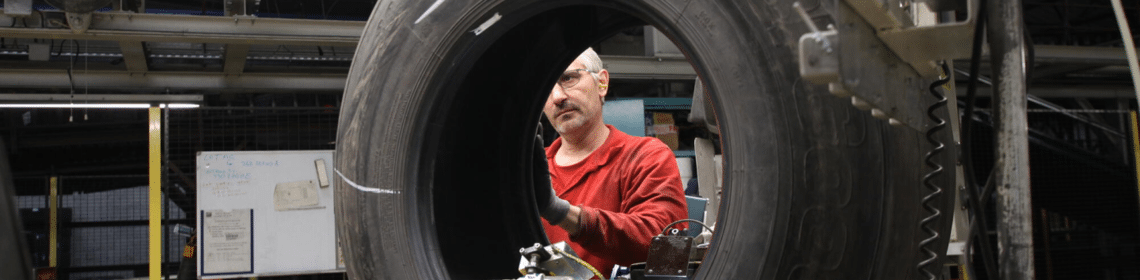
No matter which energy source operators choose, tyres play a critical role in the future of transport sustainability. Electric trucks and hydrogen vehicles are significantly heavier than their diesel predecessors and deliver more torque, leading to faster tyre wear. Regenerative braking adds further strain on tyres, creating additional maintenance and cost challenges.

While cost is a key consideration, the challenge goes far beyond ౼ it is also an environmental one. Euro 7 regulations, coming into force in 2032, will set strict limits on tyre and brake particulate emissions, underlining the fact that electric trucks are not automatically “zero-emission.”

Michelin is tackling this challenge head-on with lower rolling resistance tyres like the Michelin X® MULTI ENERGY™ for regional routes and the Michelin X® LINE ENERGY™ for line-haul ౼ both designed to last while helping fleets cut CO2 emissions, tyre particle emissions, and downtime.

“Michelin is now leveraging telematics and data-driven insights to help operators choose less energy-intensive routes and train drivers to maximise efficiency,” says Jean-François Beaupère, strengthening the case for sustainable transport solutions. “There are many ways fleets can shrink their carbon footprint, even before making the full shift to electrification,” says Jean-François Beaupère.
 

The road ahead: a multi-solution approach to sustainable transport and mobility

The last five years have shown just how much progress is possible, but also how uneven the adoption of alternative energies can be. The future of transport sustainability will not look like the diesel-dominated past. Instead, multiple technologies will coexist: Electric trucks for short-haul and urban transport or distribution, hydrogen for long-haul operations, and biogas or biofuels where electrification is not yet feasible.

“In 2035, combustion engines will be gone in theory, so we will have to find intermediate solutions,” says Yannig Renault. “A diesel engine running on biofuel makes perfect sense while we wait for electric vehicles to become truly competitive.” This pragmatic approach reflects Delanchy’s commitment: choosing the best available transportation solution without losing sight of the long-term.

“The goal is to have the least ecological impact,” adds Yannig Renault. “We collaborate with our suppliers to develop new technologies. It’s always a balance between our strategic desire, the suppliers’ offer, and the cost for us and our customers.”

What is clear is that the conversation has shifted. The debate is no longer whether to decarbonise but how quickly. Fleets like Delanchy that embrace diversification and innovations in transport sustainability are positioning themselves to capture the benefits of sustainable transport.


FAQs:

How can we make transportation more sustainable?

Transport sustainability requires innovation, collaboration, and investment in sustainable transport development — combining electric, hydrogen, and biofuel technologies to reduce emissions and improve efficiency.

What is sustainable transport?

Electric trucks, hydrogen-powered vehicles, and fleets running on biogas or biodiesel are leading examples of sustainable transportation solutions advancing sustainable urban transport and regional mobility.

What makes a vehicle environmentally friendly?

A vehicle supports transport sustainability when it uses low-carbon or renewable energy sources, minimises emissions, and contributes to sustainable transport development.

Why is sustainable transport important?

The benefits of sustainable transport include lower emissions, compliance with evolving regulations, enhanced efficiency, and long-term resilience for fleets.

You are using and outdated Web Browser.

You are using a browser that is not supported by this website. This means that some functionality may not work as intended. This may result in strange behaviors when browsing round.

Use or upgrade/install one of the following browsers to take full advantage of this website

Firefox 78+
Edge 18+
Chrome 72+
Safari 12+
Opera 71+